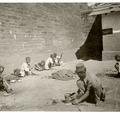
Prisoners at Work - Almora Jail
A rare real-photo court-sized postcard taken inside Almora Jail. Sent to Miss Nancy Iverson in Ealing London and postmarked Almora, Nov. 2, 1904: "Prisoners at work Almora Jail Love Daddy."
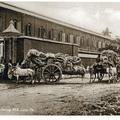
Jute was one of the major agricultural products during the Raj and for some period afterwards, with most of the crop grown in East Bengal, and the fiber processed in mills in and around Kolkata.
[Verso] Published specially for the S.J. Co-operative Society, Karachi Sole Agent for this view throughout India
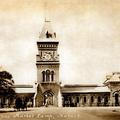
[Original caption] The Empress Market, the principal market of Karachi, is situated on the Preedy Street in Sadar Bazaar.
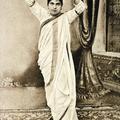
An unusual portrait of a dancing girl, simply dressed, with her hands above her head, against a flattened studio backdrop, probably in Mumbai.
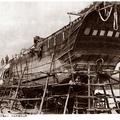
An atypical postcard that shows a ship in dry dock.
Sepia cards were printed in a brown colour instead of black inks on halftone, collotype and real photo postcards. They went in and out of fashion from 1900 through the 1940s.
This postcard, made later in Harry Clifton's career, captures some of the dark energy that surrounds the moneylender’s hut, the locus of so much anxiety in towns and villages.The English sign in the foreground reads "To the Park Cloudend & The
Published for the Scottish Mission Industries, Pune, this card is a reminder that many Tuck India cards were sponsored by local retailers.
"Peshawar City was important in Graeco-Buddhist times and its coppersmiths' bazaar must have started then," wrote Randolph Holmes, proprietor of the studio which published this postcard in a later memoir, Between the Indus and Ganges Rivers. "The
A carefully composed photograph by Fred Bremner of a Kashmiri "Hanji" as he called the same man in a closer image, also used as a postcard.