A Typical Yarkundi
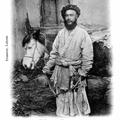
A Central Asian trader who made his way down the slippery, winding routes of the Hindu Kush, Karakoram and Himalayan ranges into Kashmir's valleys.
A Central Asian trader who made his way down the slippery, winding routes of the Hindu Kush, Karakoram and Himalayan ranges into Kashmir's valleys.
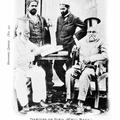
Every person in this literate Hindu caste of administrators in Hyderabad, Sindh is wearing at least one Western article of clothing.
One card, postmarked in Karachi on Nov.
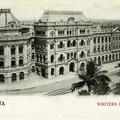
The "Writer's Building" in then Calcutta is from where British India was governed from the later 1700s until 1857. "Writers" were recruits who came from England to make their fortunes with the British East India Company; some of them became

Density, darkness and detail combine in the full collotype effect. Note the tiny markers of European presence like the [Jab]bar Khan Fruit Seller sign in the top left.
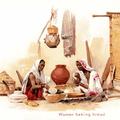
A very early court-sized postcard most probably by Paul Gerhardt, the chief lithographer at the Ravi Varma Press in Bombay.
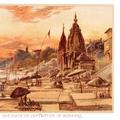
One of the most famous ghats in Varanasi.
This card, originally published by the Austrian firm of Josef Heim in Vienna in 1898 was re-published in this version by Thacker & Co. in Bombay, one of the leading Raj department stores.
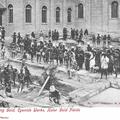
One can only imagine the enormous costs that accrued to the workers involved.
![[Dancer and Musicians]](https://www.paperjewels.org/sites/default/files/styles/square_thumbnail/public/slides/nautch-and-musicians_0.jpg?itok=1nflUs6c "[Dancer and Musicians]")
A hand-painted postcard which has been very nicely constructed to feature the dancer, who is entirely in colour. The musicians are partially sketched, with only their instruments, sashes and turbans coloured.
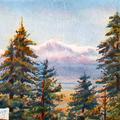
Most likely the earliest postcard of the 9th highest peak in the world, from an early Aquarelle series by F. Hartmann depicting scenes in Kashmir.
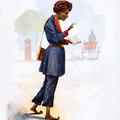
One of the finest of Dhurandhar's postcards, which satirizes and draws attention to the novelty of the postcard – that anyone could read it, including and especially the postman.
