The "Gharry" Our Local Chariot in Which We Often Tour the Town

A 1945 calendar postcard by the Anglo-Indian animator and cartoonist Merton Lacey featuring Allied troops in India fighting the Japanese in Indo-China during World War II.
A 1945 calendar postcard by the Anglo-Indian animator and cartoonist Merton Lacey featuring Allied troops in India fighting the Japanese in Indo-China during World War II.

Moorli Dhur & Sons, at Ambala, a railway junction 130 miles away from Lahore, dominated the Punjab postcard market by 1910. Perhaps because of its distribution clout, it published a humorous series on different aspects of life for colonial foot

One of Moorli Dhur's series on Indian domestic staff shows a cook cutting a bird with a knife between his toes while smoking a hookah. Many publishers – Johnston & Hoffman in Kolkata, Higginbothams in Chennai, Thacker, Spink & Co.
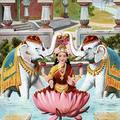
[Verso] Gaja-Gauri :- Goddess Parwati. [end]
From a painting by Raja Ravi Varma, Parvati is the Hindu goddess of fertility, love, beauty, marriage, children, devotion, divine strength and power.

Marwaris are from the Marwar region of Rajasthan in India. They speak Marwari. The word Marwar is said to be derived from the Sanskrit word Maruwat, or 'desert'. This striking image was a popular postcard.
Sent from Lucknow, Jan. 26, 1913 to Mr.

[Original Italian title] La Posta Nelle Indie Inglesi [end]
[Original caption] D'estate quando le infezioni della polvere trovano nel sudore e nella pelle un terreno comodissimo al loro sviluppo, l'unico disinfetante, che non essendo veleneso ne

Shell cutters usually use saws and other blade instruments to cut raw shells into different shapes to create jewelry, bangles, drinking vessels and other accessories.

Major Indian famines were caused by droughts and poor food distribution policies. Though uneven rainfall was a major cause of Indian famines in the 19th century, faulty administrative and economic policies were equally responsible.
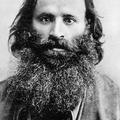
John Campbell Oman (1841-1911), author of The Mystics, Ascetics and Saints of India (1903) describes the incident that made him take it upon himself to write this encyclopedic work towards the end of his life.
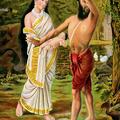
Vishvamitra was a revered sage in ancient India; this postcard from one of Ravi Varma's most famous paintings shows how he rejects knowledge of his child by turning away and hiding his gaze with a dramatic gesture.
[Original caption] Menaka sent by
