Bangalore. Alsur Temple Gateway.
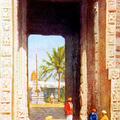
A standout Tuck's postcard of one of the oldest temples in the city, with the tall dark gateway set-off against the people and view of the temple inside.
A standout Tuck's postcard of one of the oldest temples in the city, with the tall dark gateway set-off against the people and view of the temple inside.

An unusual vertical postcard, with the boat spilling out of the near frame, and an active centered boatman. An unknown owner wrote in pen on the back: "Note the shape of the paddle.

An advertising card for one of the big London-based steam-ship travel firms who served the travel-between-India and Europe market.

A view of the canal in Srinagar, the summer capital of the Maharajah-ruled state of Jammu and Kashmir during the Raj. This view of a house jutting over the canal was popular among photographers and postcard printers.
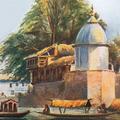
This is among the earliest postcards of Kashmir, printed for a British publisher most likely by Raphael Tuck & Sons in London just before they themselves started printing what are probably the most well-known series of Indian postcards under their
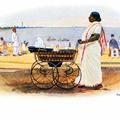
This postcard shows a nanny with a pram on the “Queen’s necklace” of Malabar beach in Bombay. The artist Dhurandhar and other fellow J.J.
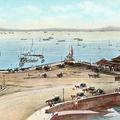
The pier across the Taj Hotel where the Gateway to India now stands. This area was expanded with a sea wall and entry steps before the Gateway to India was completed in 1924. The Japanese-style pavilion seen here was removed.
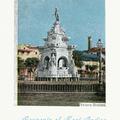
[Original] Victoria Brunnen
Compagnie Comet seems to have been the earliest publisher of a series of cards on India, their name appearing as "Verlag [Firm] "Compagnie Comet", Fr. Th.
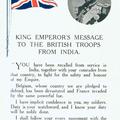
Over a million Indian troops served as part of the British forces in World War I; postcards were used to help recruit them, often in languages like Gujarati, though this card seems to have been intended more for British troops already serving in
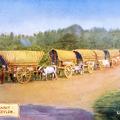
The Sri Lankan tea industry grew from 250 acres under cultivation in 1876 to almost 400,000 acres in 1900.8 Some 150 million tonnes of tea were produced in 1900 worth 50 million rupees, half of Ceylon’s total exports.
