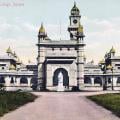
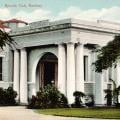
Nicknamed the "Eton of the East," renowned for its Indo-Saracenic architecture, blending Mughal, Rajputana, and Gothic styles, it was founded in 1875 to provide modern education to Indian aristocracy, particularly princes and nobles of Rajputana.
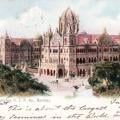
Opened in 1888, the message on this postcard, dated October 12, 1905 (and postmarked in Ambala on Nov. 11) is correct: "Dear Aunt This is about the largest Railway Terminus in the World. with Love from T.H.H."
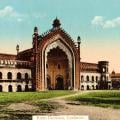
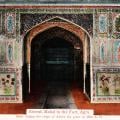
Rumi Darwaza is an iconic gateway located in the heart of Lucknow, India. Built in 1784 by Nawab Asaf-ud-Daula, the fourth Nawab of Awadh, this symbol of the city blends Roman and Awadhi architectural styles, featuring intricate carvings of flowers…
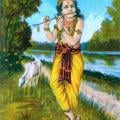
[Original handwriting, verso] "This musical instrument is called Murli. When Krishna brought the snake out of the Jamna river he played on this instrument and on that account he is also known as Murlidhar." [end]
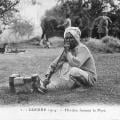
Postmarked May 24, 1919, some six months after World War I was over, though the card itself is probably dated earlier. Note the European man apparently smoking a pipe in the background.
Once one of the most important clubs in Bombay, it was opened in 1833 when the European population in the city was about 1,300. The club was known for its luxurious amenities, including chambers that cost Rs.
An early postcard of Kashmir by R. E. Shorter, a little known photographer who would have competed with Fred Bremner as one of the first to publish postcards of the princely state.
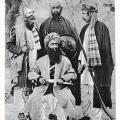
Postcards of Pathans who inhabited the North West Frontier Province (NWFP, now Khyber Pakhtunkhwa) bordering Afghanistan were often shown with their weapons, in poses that made them see dangerous.