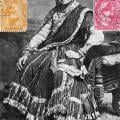
This card with its carefully arranged colorful stamps was postmarked March 16, 1911 in Egypt, and likely sent in an envelope to someone as there is no address on the back and likely was destined for a collector.
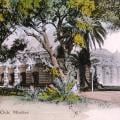
Constructed in 1880 by the Nawab of Bahawalpur of bricks made from mud from the Chenab River, the Multan Club has thirteen domes in what is called a Turkish style. Today it is the Army Garrison Mess, and hosts many weddings.
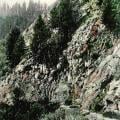
The pipeline under a 4 kilometer walk between Nathiagali and Ayubia is still a popular, spectacular walk and was apparently first built in 1851 and improved in 1930.
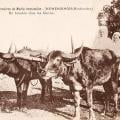
Many of the very few postcards of Bangladesh from pre-Partition times are by Catholic missionaries in Mymensingh in particular, here shown incongruously on a bullock cart.
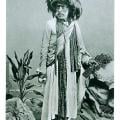
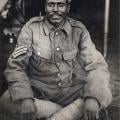
A striking studio portrait in which the viewer's eyes are drawn by to subject's wide-open gaze. Was he asked not to blink? Or did the photographer amend the negative?
Postmarked Dec. 3, 1914, this portrait would have been made soon after the first soldiers from India arrived in France, where their presence was widely celebrated in the press and on postcards.
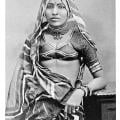
One can imagine that the textiles worn by the woman are vibrant with color, and the postcard could be spectacular hand-tinted, but the stripes still make for a billowing effect in black and white.
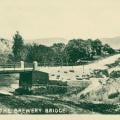
Opened in 1886 by the Murree Brewery Company, the brewery was destroyed in the Quetta Earthquake of 1935 and never rebuilt (the Murree Brewery Company continues to flourish in Pakistan).