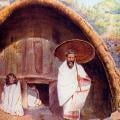
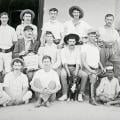
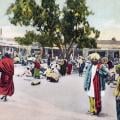
[Original caption] A Toda House _ Its Master and Mistress. A native residence of the roughest kind of architecture, thatched or wattled roof, unglazed holes for windows and a general air of crampy discomfort, but the hot season begins early in the…
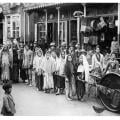
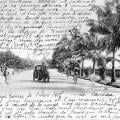
Labor-intensive road rolling helped to create smoother and less permeable roads. The early history of road rolling in Europe can be traced to the 18th century when roads became militarily important.
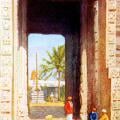
A standout Tuck's postcard of one of the oldest temples in the city, with the tall dark gateway set-off against the people and view of the temple inside.
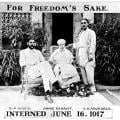
The early 20th-century Home Rule League demanded self-government for the whole of India from British rule and was particularly active between 1916-18. Many Indian leaders supported this movement including the famous nationalist, Bal Gangadhar Tilak.
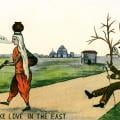
There are few intimations of relations between Europeans and Indians on postcards – or other media for that matter – making this postcard a startling exception. “Stay quiet about it,” says the sweeper in Hindu-Urdu. “Sure,” replies the soldier.
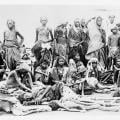
Major Indian famines were caused by droughts and poor food distribution policies. Though uneven rainfall was a major cause of Indian famines in the 19th century, faulty administrative and economic policies were equally responsible.
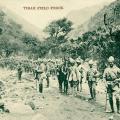
The original image this postcard is based on was very popular and shows General Lockhardt on June 4, 1897 in the Arhanga Pass above Swat Valley in the then North West Frontier Province (NWFP, now Khyber Pakhtunkhwa).
A real photo postcard presented with compliments from the Murree Brewery Company (note bucket in seated man's hands), and title in back in pencil "Camp Adonia." Likely to have been before 1905 because the back is undivided.
Bangalore is well-known for sprawling shopping malls, although in British times it was largely a cantonment town and only recently has become an information technology hub and one of the cities most prominently linked to the outsourcing of Western…