Baluchistan Begger [Beggar]
![Baluchistan Begger [Beggar]](https://www.paperjewels.org/sites/default/files/styles/square_thumbnail/public/slides/baluchistan-beggar.jpg?itok=OPmDWHAl "Baluchistan Begger [Beggar]")
This apparently one-legged man is being used here to represent a type, but what is most eye-catching is the way the veins in his arms seem so like the cracks in the wall.
This apparently one-legged man is being used here to represent a type, but what is most eye-catching is the way the veins in his arms seem so like the cracks in the wall.
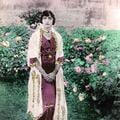
These real photo was both hand-tinted, and, unusually, golden glitter also applied on the woman's wrap.
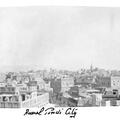
An early real photo postcard of Rawalpindi. These allowed amateurs to directly shoot a postcard in camera, and end up with a photograph which a hundred years later has been faded but can be restored with modern digital tools as this one has been.
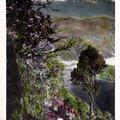
The postmark is illegible, but the message to S. Cook, Esq. Black Friars, Meadown View Road, Plympton, S. Devon, England reads: "Saw Mt. Everest at dawn today it was a lovely sight, have to get up early 3.30 before the mists come.
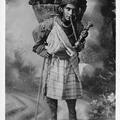
A charcoal seller she may have been, but the nose ring, choker and hookah suggest she had other skills too. This is likely a woman as she seems to be dressed in a typical Pahari style of the era.
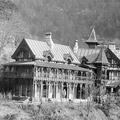
The Ripon Hospital in Shimla, now known as Deendyal Upadhyay Zonal Hospital, has a rich history dating back to the British colonial era.
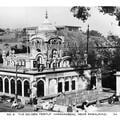
The Gurdwara Panja Sahib, is a highly revered Sikh shrine located in the town of Hasanabdal in Attock District, Punjab, Pakistan is associated with Guru Nanak, the founder of Sikhism.
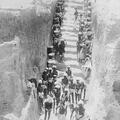
While it is unclear where and when this postcard was taken, it could have been in 1899-1900 when there was a large famine in Hyderabad with relief works photographed by Raja Lala Deen Dayal.
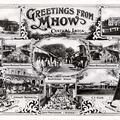
There are 14 images in this carefully constructed postcard of a cantonment town in Central India now known as Dr. Ambedkar Nagar (after the first great leader of India's Dalit community). The publisher, K.
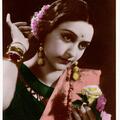
Naseem Banu (4 July 1916 – 18 June 2002) was a prominent Indian actress who rose to fame in the 1930s and 1940s.
