Greetings from Darjeeling
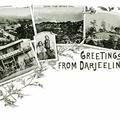
One can only marvel at the early "Greetings from" postcard, the way five photographs are woven into one image with the help of plant motifs, in this case tree branches but often palm trees for Indian images.

One can only marvel at the early "Greetings from" postcard, the way five photographs are woven into one image with the help of plant motifs, in this case tree branches but often palm trees for Indian images.
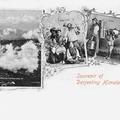
Thomas Paar was one of the earliest publishers of Darjeeling postcards, and a longtime photographer with a grand studio in the middle of the hillstation.
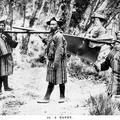
"I was carried to and from the hall in a primitive conveyance, called a “dandy”; it consists of a bit of canvas, fastened stoutly to an oblong frame of wood, terminating in a short pole at either end," writes Margaretta Catherine Reynolds, author of
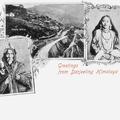
An early "Greetings from" postcard of Darjeeling by its premiere early photographer Thomas Paar. Clare Harris in her excellent book Photography and Tibet (Reaktion, 2016) "deconstructs" the figure on the left, whom she correctly calls a 'poster boy'
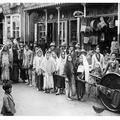
Labor-intensive road rolling helped to create smoother and less permeable roads. The early history of road rolling in Europe can be traced to the 18th century when roads became militarily important.
