"The professional photographers of Darjeeling generated innumerable prints depicting those whose toil supported the lifestyles of the colonialists in their homes and businesses, and who created products they loved to consumer," writes Claire Harris…
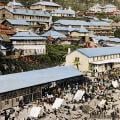
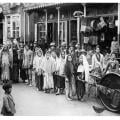
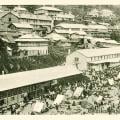
Darjeeling, located in the lower range of the Himalaya, is often called the "Queen of the Hills." Its Sunday market, when villagers and merchants from the neighbouring villages and towns come to offer their wares, was a very popular postcard subject…
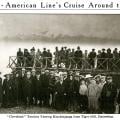
Hamburg-American Line was one of the largest shipping lines in the world, and brought a majority of German immigrants to the US, as and many tourists from the US to India.
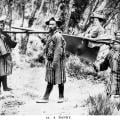
"I was carried to and from the hall in a primitive conveyance, called a “dandy”; it consists of a bit of canvas, fastened stoutly to an oblong frame of wood, terminating in a short pole at either end," writes Margaretta Catherine Reynolds, author of…
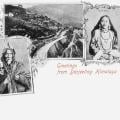
An early "Greetings from" postcard of Darjeeling by its premiere early photographer Thomas Paar. Clare Harris in her excellent book Photography and Tibet (Reaktion, 2016) "deconstructs" the figure on the left, whom she correctly calls a 'poster boy'…
Labor-intensive road rolling helped to create smoother and less permeable roads. The early history of road rolling in Europe can be traced to the 18th century when roads became militarily important.
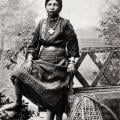
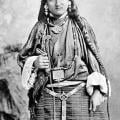
Clare Harris in her book Photography and Tibet (Reaktion Books, 2016) writes of this postcard, "a portrait of a young woman that features prominently in The Buddhism of Tibet as a generic illustration of Tibetan femininity implies that she'd been…
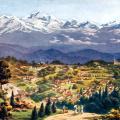
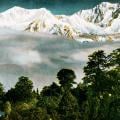
"Darjeeling is a hillstation and Sanatorium, situated on the lower slopes of the Himalayas. Guide-books tell us that its name signifies “the sunny spot,” but I consider this a misnomer, “The abode of clouds” would, I think, have been more…