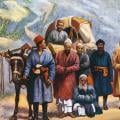
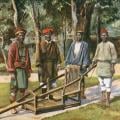
[Original caption] Ladakus, on the Thibetan border. These men, who are in reality travelling merchants or hawkers, are natives of Thibet, and during the summer months they journey via Kashmir into the Indian provinces.
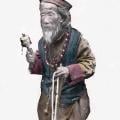
An uncommon type of postcard flourished in Darjeeling, with individuals on real-photo black and white postcards carefully silhouetted and then individually hand-painted.
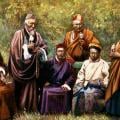
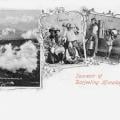
[Original caption] Group of Lamas. The Lamas are priests of the Buddhist religion. Buddhism prevails in Mongolia, Tibet, and in parts of India, having its chief monastery at Lhasa, Tibet, where resides the Dalai-Lama or Grand Lama, who is the Pope…
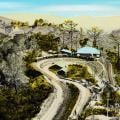
One of the most common postcards from the Darjeeling area. The double loop offers a magnificent view of Darjeeling and Mount Everest. The toy train of Darjeeling is a major draw for tourists and connects Darjeeling to Siliguri in North Bengal.
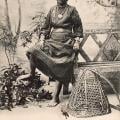
Although a coolie – "a hired labourer, or burden-carrier"(Hobson-Jobson, p. 249) – were at the bottom of the social ladder, and the word is said to originally come from Kolis, a hill-people in the Western Ghats, "whose savagery, filth and general…
Darjeeling owes its name to a blend of the Tibetan words namely "Dorje" (thunderbolt) and "ling" (place), that translates to "The land of the thunderbolt."
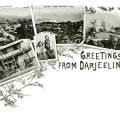
One can only marvel at the early "Greetings from" postcard, the way five photographs are woven into one image with the help of plant motifs, in this case tree branches but often palm trees for Indian images.
Thomas Paar was one of the earliest publishers of Darjeeling postcards, and a longtime photographer with a grand studio in the middle of the hillstation.