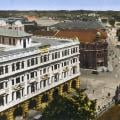
Colombo, a natural port on the Indian Ocean, became the capital of Sri Lanka in 1815 under British rule. The town displays the architectural styles of the nations who have occupied it.
A rich color palette pervades this scene. What is particularly rare is the upside down caption at the very bottom, "Gluckstadt [Lucky city in translation], Rathaus [Town Hall]." The town still very much exists in Germany, the title in error an…
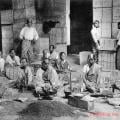
A nice representation of a small portion of the human labor – a dozen people here – that went into the preparation and production of a commodity like tea.
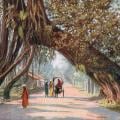
[Original caption] Ceylon. Banyan Tree Arch, near Colombo. Beyond the hot and dusty bazaars of Kolupitiya the road runs under palms and bread-fruit trees until at Kalutara it reaches a splendid natural archway made by a single banyan tree, some of…
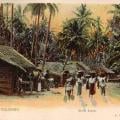
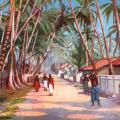
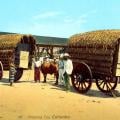
[Original caption] Road near Colombo. This is the very fringe of Pettah or native quarter of Colombo. Coconut palms shade it from the hard blue sky and "the state o the sun"; the noise of brass-workers goes on incessantly under the bright red roofs.
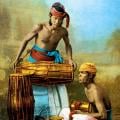
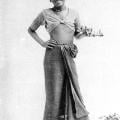
A beautiful studio portrait featuring the "thammattama," drums used in Buddhist rituals in Sri Lanka. They may be derived from a frame drum used in Tamil Nadu, and their sound is said to have irritated British colonists.
"People like me who came to England in the 1950s have been there for centuries," writes the Jamaican cultural theorist Stuart Hall, "symbolically we have been there for centuries. I was coming home.
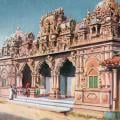
[Original caption] Hindoo Temple, Colombo. In the Pettah or native quarter of Colombo is Sea Street, and in Sea Street are twin Hindoo temples, one of which is shown here.