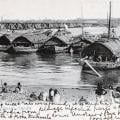
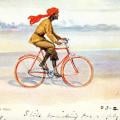
Handwritten on the back is a part of a longer message that discusses the plague then present in Bombay: “A poor soldier got it but recovered a Sergeant’s child died of it & Major Murray has been very ill and is only a little better.
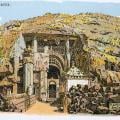
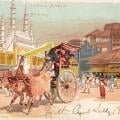
An early court-sized postcard by Paul Gerhardt, chief lithographer at The Ravi Varma Press in - yes - Karli, outside Bombay. The firm moved its premises here in the late 1890s.
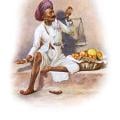
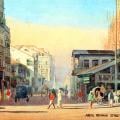
This finely lithographed card by Clifton & Co. was one of the their most popular images, and produced in multiple black and white formats. Originally from a photograph, this colored version would have required multiple print runs.
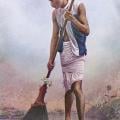
Note the rich character on this man's face in an image by M.V. Dhurandhar, one of India's most exceptional and prolific early 20th century painters and postcard artists.
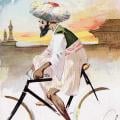
Another exuberant, deftly rendered very early postcard by Paul Gerhardt, chief lithographer at the Ravi Varma Press in Bombay. Note the simply drawn mosque minarets, the colors that pull you in while the cart pushes out into the foreground space.
[Original caption] Abdul Rehman Street, Bombay. This is one of the busiest spots in the city of Bombay and also one of the principal native streets. [end]
Note the building under construction on the right.
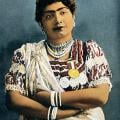
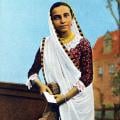
Parsis in India originally came from Iran (Persia), and Parsi ladies were among the first Indian women to have had an active public life, no doubt helped by a high literacy rate in the community (there is a postcard or letter in the woman's hand).