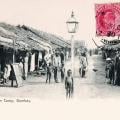
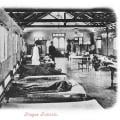
One of the most popular views of plague camps in Bombay at the turn of the century, here with a nicely positioned stamp. Postmarked June 30, 1906, Mumbai.
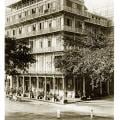
Lynne Withey writes in Grand Tours and Cooks Tours (London, 1998), about the growth of the Western tourist trade in the 1890s, that "apart from a few first-class establishments in major cities, most hotels were barely acceptable by Western…
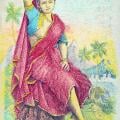
An extremely rare early postcard by an little-known lithographer, W. Cooper, in Bombay. It looks to crude to have been made at The Ravi Varma Press. Cooper seemed to prefer risque images.
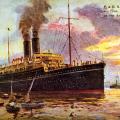
Illustrated postcards actually came to Mumbai at an inauspicious moment. The increased ship traffic from Hong Kong and South Africa brought the bubonic plague back to Mumbai in 1896.
The word "Pariah" owes its origin to the Pariah caste of the Hindu society of India. Pariah originally referred to a person belonging to a low caste of southern India, and then someone who is isolated from the society, or considered different by…
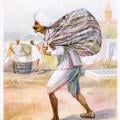
Another evocative card by M.V. Dhurandhar injects personality into the roving washerman. In the background is an edifice of the "new" Bombay while in the foreground we see the age-old profession of washermen cleaning the resident's laundry.
Dinshaw Billimoria (1904-1942) was one of India's most famous silent film actors, and became best known for his success in R. S. Choudhury's Anarkali (1928).
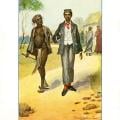
An early Dhurandhar postcard showing, as he was wont to do, the new types springing up in the city of Bombay as office workers and other people wearing Western shoes needed to replace their laces.