Downed English Fighter Plane
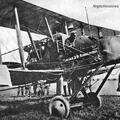
A British fighter plane, called "Rawalpindi" and named after the 29th Punjab regiment, brought down in apparently excellent condition by German forces during World War I.
A British fighter plane, called "Rawalpindi" and named after the 29th Punjab regiment, brought down in apparently excellent condition by German forces during World War I.
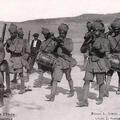
Indian troops in France brought their own music bands which created great interest among the French, who attended concerts in towns where these men performed. Note the dhols and flutes shown here. As one correspondent wrote: “Mr. G.
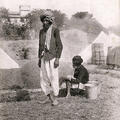
Indian troops in France were supplied by their own cooks and bakers, with the scent of freshly baked naan in tandoori ovens often wafting over the countryside as reported by the journalists who accompanied them.
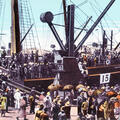
Hundreds of thousands of soldiers from India were recruited to fight with the Allied armies in Europe, Africa and Mesopotamia during World War I, and most passed through Bombay on their way to the front.
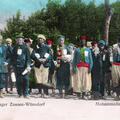
During the first World War, the Germans held their captives at a number of camps, and Muslims in particular would find themselves at Zossen-Wunsdorf not far from Berlin.
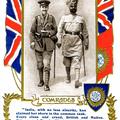
"India, with no less alacrity, has claimed her share in the common task. Every class and creed, British and Native, Princes and People, Hindoos and Mahomedans, vie with one another in a noble and emulous rivalry.
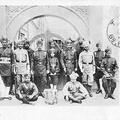
During the so-called Boxer Rebellion in China, when local Chinese radicals joined with the Imperial Army to fend off Western, Russian and Japanese advances, Indian troops fighting on the British side played a role in the battle for the city in July
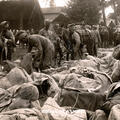
A candid image of Indian troops in Ashurst, Hampshire, England unpacking their kit most likely before being sent to the war front in Europe during World War I.
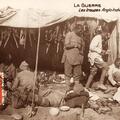
A very nicely stamped postcard, with the upside down figure, symbol of France, if the the "language" of stamp positioning holds in this case, asking "Do you remember me?"
The photograph is also exceptional, with its details of the men's kits, the
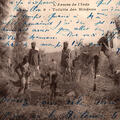
Scenes of Indian troops washing were witnessed by French inhabitants, especially women who often found the soldiers attractive.
