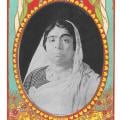
An advertising postcard celebrating the Independence struggle and the poet Sarojini Naidu, who the Turkish poet Halide Edib, then on a visit to India, described in her book Inside India (1938, p. 44):
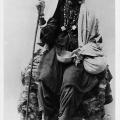
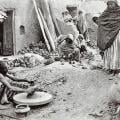
Women are often shown as dancers, rarely this elderly as beggars on postcards. This photograph was likely taken in a studio, with the woman sitting on a stone which might be covered with animal skins.
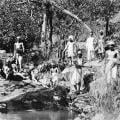
A variety of Adivasi people (as well as officials and a soldier in the center) as part of a rich forest surrounding. Hobson-Jobson (1906) gave this definition
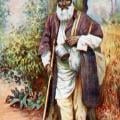
[Original caption] A Begging Fakir. A fakir is one of the most frequent met types in India, which literally swarms with these "holy men." A fakir is a sacred person, whose life is spent under self-imposed vows, of which poverty is usually a…
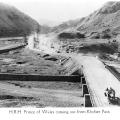
A rare visit by the Prince of Wales to the edges of Empire; note the car in the foreground and mid-ground. Edward VIII later gained notoriety for abdicating in 1936 after choosing to marry a divorced America woman, Wallis Simpson.
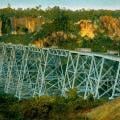
Gokteik Viaduct was constructed by the Pennsylvania Steel Company in the Shan state of Upper Burma. This bridge is 320 feet in height and 2,250 feet in length and consists of ten spans.
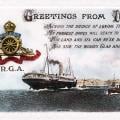
A later "Greetings from" postcard printed by premiere British publisher Beagles on behalf of a Rawalpindi-based publisher who would have sold this to British troops in cantonments like Rawalpindi, in this case members of the Royal Garrison Artillery…
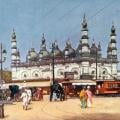
[Original caption] Dhurmtollah Musjid. One of the busiest localities of Calcutta. It is noticeable that in Dhurmtollah Lane, the names on the shops and offices are all native names while close by in Dhurmtollah Street they are chiefly European.