[Beegun Songstress of Lucknow]
![[Beegun Songstress of Lucknow]](https://www.paperjewels.org/sites/default/files/styles/square_thumbnail/public/slides/beegun-lucknow-color.jpg?itok=rsZGZMsG "[Beegun Songstress of Lucknow]")
The title comes from a collotype with this title.
The title comes from a collotype with this title.
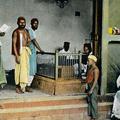
Although opium was a major crop in the rise of the East India Company, and India the major producer of opium sent to China, with production carefully taxed and recorded, barely a handful of postcards seem to acknowledge the crop and its manufacture.
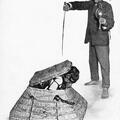
A thematically most unusual postcard.
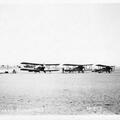
An early British Royal Air Force base in Pishin, Balochistan, near the Afghan border and what was then Northwest Frontier Province where the British were engaged in suppressing tribal resistance throughout the 192s and 1930s.
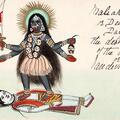
[Original title] Maliakali or Devi as Durga the destroyer of the demons of all devouring thing. [end]
Kali and Durga are closely related manifestations of the divine feminine energy in Hinduism.
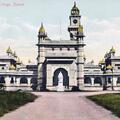
Nicknamed the "Eton of the East," renowned for its Indo-Saracenic architecture, blending Mughal, Rajputana, and Gothic styles, it was founded in 1875 to provide modern education to Indian aristocracy, particularly princes and nobles of Rajputana.
![Tagore [Silk]](https://www.paperjewels.org/sites/default/files/styles/square_thumbnail/public/slides/tagore-silk.jpg?itok=LiKDYsxe "Tagore [Silk]")
On the occasion of Rabindranath Tagore's birthday on May 7th, a very rare silk postcard of the great writer. The image is printed on silk, which is them stretched over and pasted on cardboard.
![Guerre 1914 - Hindu Fumant La Pipe [Indian Smoking a Hookah]](https://www.paperjewels.org/sites/default/files/styles/square_thumbnail/public/slides/guerre-1914-hindu-fumant-la-pipe.jpg?itok=kwDQFF8z "Guerre 1914 - Hindu Fumant La Pipe [Indian Smoking a Hookah]")
Postmarked May 24, 1919, some six months after World War I was over, though the card itself is probably dated earlier. Note the European man apparently smoking a pipe in the background.
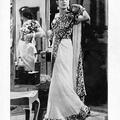
Khursheed Bano was a prominent actress and singer in Bollywood during the 1930s and 1940s. Born on April 14, 1914, she was a pioneer of Indian cinema.
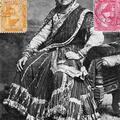
This card with its carefully arranged colorful stamps was postmarked March 16, 1911 in Egypt, and likely sent in an envelope to someone as there is no address on the back and likely was destined for a collector.
