A Charcoal Seller, Dalhousie
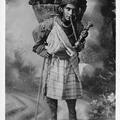
A charcoal seller she may have been, but the nose ring, choker and hookah suggest she had other skills too. This is likely a woman as she seems to be dressed in a typical Pahari style of the era.
A charcoal seller she may have been, but the nose ring, choker and hookah suggest she had other skills too. This is likely a woman as she seems to be dressed in a typical Pahari style of the era.
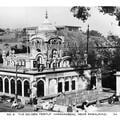
The Gurdwara Panja Sahib, is a highly revered Sikh shrine located in the town of Hasanabdal in Attock District, Punjab, Pakistan is associated with Guru Nanak, the founder of Sikhism.
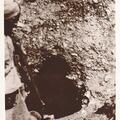
Mirza Ali Khan (1901-1960) was a Waziri tribal leader who fought a number of campaigns against the British in the 1930s and 1940s, and later against Pakistan as well in support of an independent Pashtunistan.
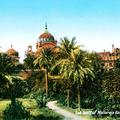
An unusual angle on the Samadhi of Maharajah Ranjit Singh in Lahore.
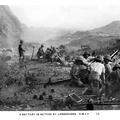
A postcard probably taken during the 3rd Afghan War in 1919 on the border between British India and Afghanistan; the battery was not far from camp shown in the background.
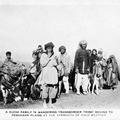
Occasionally, nomads — those most fleeting of human subjects and least sedentary inhabitants of our planet—were caught on a postcard.
![The Chief's [Aitchison] College, Lahore](https://www.paperjewels.org/sites/default/files/styles/square_thumbnail/public/slides/aitchison-college_0.jpg?itok=nEdo5MIb "The Chief's [Aitchison] College, Lahore")
Better known as Aitchison College, the name it was given shortly after the foundation stone of this building was lain in 1886, "Chief's College" still continued to be used long afterwards given that it was originally founded in Ambala as a school for
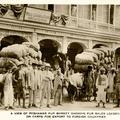
One of those postcards that highlights the complex trade relationships between the Raj and Afghanistan, if not Central Asia.
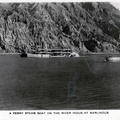
This does not seem like a fancy Indus river steamer. It is after the heyday of the Indus steamer business that actually never really displaced the boatmen's traffic along the Indus and other river systems in Punjab, UP and Sindh.
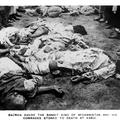
Contemporary accounts of how Hamid Kalkani died are unclear. Nadir Khan is said to have chased him to his village in October 1929 where he was stoned to death by residents which this postcard may show.
