Data Khel fort, Waziristan
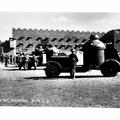
It is unclear from which of the many British campaigns in Waziristan, Northwest Frontier Province (NWFP, now Khyber Pakhtunkhwa) on the border with Afghanistan this postcard of an early armored car is from.
It is unclear from which of the many British campaigns in Waziristan, Northwest Frontier Province (NWFP, now Khyber Pakhtunkhwa) on the border with Afghanistan this postcard of an early armored car is from.
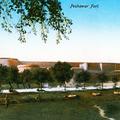
After Ahmad Shah Durrani took Peshawar in 1747, Bala Hissar served as a royal residence for the Durrani Empire. This period is strongly associated with the fort’s role as an Afghan administrative and courtly center in the frontier city.

[Original caption] Narsingarh–Entrance to Old Fort. Narsingarh is the capital of the state of that name in Central India.
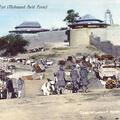
This Mohmand conflict in 1908 was with the so-called “Hindustani Fanatics” who found sanctuary from the Sikhs in the mountains north of Swat in Northwest Frontier Province (NWFP, now KPK or Khyber Pakhtunkhwa) in the 1840s (they survive to this day).

The Hari Parbat hill overlooking Srinagar is considered sacred to the Kashmiri Hindus. From a self=published series by an English amateur artist known as E.E.
[Original hand title in albumen negative] General Willock's Residence at Shabkadr [end]
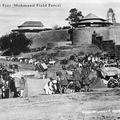
The fort at the center of the Spring 1908 battles between Mohmand tribesmen and the British-Indian army.

An unusual postcard in its deft juxtaposition of old and new, railway tracks and historic fort. The Bala Hisar Fort is Peshawar's largest landmark derives its name "Bala Hisar" from Persian, meaning elevated or high fort.

[Original German] Das Oberste Thor Vom Fort Gwalior [end]
This image is from a painting by Josef Hoffmann, an Austrian painter and early postcard artist who traveled to India in the mid-1890s.
