Greeting from South India
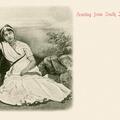
An unusual early "Greetings from" card by Wiele & Klein, one of the leading photographic studios in South India. The woman looks slightly bored, if not irritated in this studio pose.
An unusual early "Greetings from" card by Wiele & Klein, one of the leading photographic studios in South India. The woman looks slightly bored, if not irritated in this studio pose.
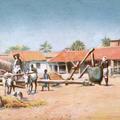
[Original caption] Madras, Cocoanut Oil Mills.
![Mudellar [Mudaliar] Caste Lady](https://www.paperjewels.org/sites/default/files/styles/square_thumbnail/public/slides/nautch-girl-india-handwritten.jpg?itok=e4TJdqcz "Mudellar [Mudaliar] Caste Lady")
Possibly a dancer in a nicely hand-tinted postcard; note the red tip of the plant pointing to the lady.
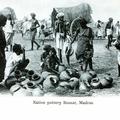
A rich scene and well-preserved collotype to match, photographic in spontaneity and effect. One woman is glancing up from the pots, oblivious to another handing her one. Some men look at the camera, others walk by indifferent.
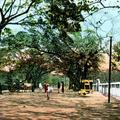
Historical records in Chennia mention Nungambakkam as one of the three villages (in addition to Egmore and Chetput) that the British East India Company purchased in 1743 to form the port city of Madras.
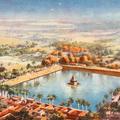
[Original caption] Madras, Holy Tank at Tirukalikunoram. Here in a great square court surrounded by people, palms, and neem-trees, we have one of the great Holy Tanks of Indian pilgrimage.
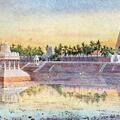
[Original caption] Mylapore Tank. Madras is built in a straggling fashion along the seashore. Most of the roads run between avenues and are flanked by groves of palms and other trees.
![Greetings from Madras [Message]](https://www.paperjewels.org/sites/default/files/styles/square_thumbnail/public/slides/greetings-from-madras-wiele-klein.jpg?itok=VPBE9a0x "Greetings from Madras [Message]")
This particular card was mailed to France from Chennai on Dec. 25, 1900. Note the entire message is readable, but from what is seems to say:
[Unclear first word] "Happy new year, Mr. Francis. Really it is not cold here. Antoine."
[Original French,
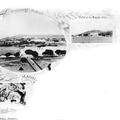
A very early "Greetings from"postcard. Note how the top two images are also prefixed with a "View of" as part of the title. See the version with a message in French.
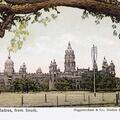
"The High Court's imposing, labyrinthine Indo-Sarcenic buildings, with long corridors, high ceilings, much ornamental tiling, carving and iron-work, beautiful stained glass arches and portrait gallery, is one of the City's landmarks," wrote the late
