Buckingham Canal Basin, Madras.
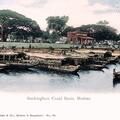
The Buckingham Canal is an almost 500 mile long freshwater canal built in the 19th century that runs along the Coromandel coast in eastern India.

The Buckingham Canal is an almost 500 mile long freshwater canal built in the 19th century that runs along the Coromandel coast in eastern India.

[Original caption] Madras, Seven pagodas. This is the largest of the Seven pagodas of Mahabalipuram (once a city and now a village), 35 miles south of Madras.
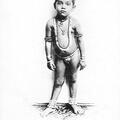
Little children were one of the most popular subjects of early postcards from Chennai (Madras). Many of the little children in these postcards wore – or were dressed with – a lot of jewelry, which would have made them compelling subjects.
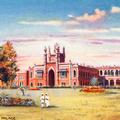
[Original caption] Madras. Chepauk Palace.
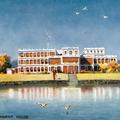
[Original caption] Madras, Government House. Government House looks out upon the Coom river at the back, and its front gives upon Mount Road, the principal street in Madras.
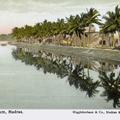
A view of the shortest river (76 miles) to empty into the Bay of Bengal, and a long-critical artery for Chennai, at a time when it was much less polluted than today.
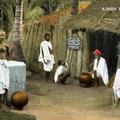
"In India, the toddy shop may well be called ‘The Poor Man’s Club’," wrote Mahatma Gandhi in Harijan (1928),"the well- to-do folks have Willingdon Clubs and Gymkhanas of diverse description, to fulfil their instinct of sociability and to give them
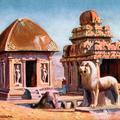
[Original caption] Madras, Seven Pagodas. These extraordinary buildings are to be seen at Mahabilipuram, 35 miles south of the city of Madras.
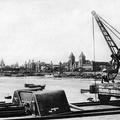
The Madras Port (now called Chennai Port) is more than 125 years old. The construction of this pier was a major step as previously, bringing people and goods to land via boats from large ships was treacherous.
Postmarked 19 Feb [1907] and addressed
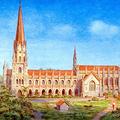
[Original caption] San Thome Cathedral. The town of S. Thome, now part of Madras City, was named after the Portugese pioneers, after St. Thomas the Apostle, who is said to have evangelized the country.
