Sweetmeat seller
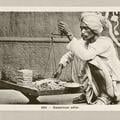
The mithai-wala was a popular postcard subject; in this composition the textile pattern behind the man gives the image energy even as the man stares somewhere far away.
The mithai-wala was a popular postcard subject; in this composition the textile pattern behind the man gives the image energy even as the man stares somewhere far away.
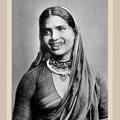
Smiles on postcards from the early 1900s are rather rare, possibly because most portraits required the sitter to stay still for many seconds while the exposure was made, especially in the 19th century when most portraits were struck and re-purposed
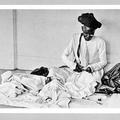
Nestor Gianaclis, like D. Macropolo & Co., another Greek-owned firm, was not primarily a photographer so much as a Greek tobacco merchant whose Calcutta office also issued collotype picture postcards and photographic prints in the early 1900s.
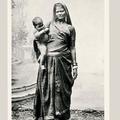
Postmarked Calcutta January 12, 1912 and sent to Ed Froehmer [sp?], Seward, Nebraska, USA.
[Verso] "Calcutta, India January 1012. This is the way that an Indian mother carries her child."
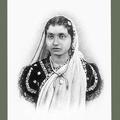
This striking image of a Bengali woman was apparently first published by a Greek tobacconist based in Kolkata, Nestor Gianaclis, and later also published in different variations by D.
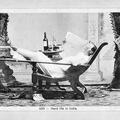
Addressed to Mr. R.W. Leming, 3 Duff St., Poplar, London and postmarked Calcutta G.P.O. August 5, 1913: "A/S Inverie What do you think about this. I hope this will find you all well. It is very hot here. Will send some more later. Kind regard to all.
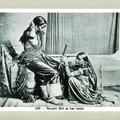
A slightly unusual portrait of two nautch girls in what seems like a room but is likely a studio given the painted column on the left. The bed is a prop, and the woman seated on the floor is apparently holding a mirror to the woman seated on the bed.
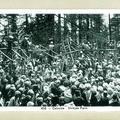
An unusually lively postcard with what seem to be wooden full circle swings or spinners common at amusement fairs. What exactly the Shibjee Fare [Fair] was is unclear.
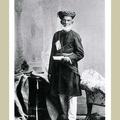
The word "peon" owes its origin to the Spanish word which means laborer.
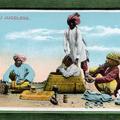
Although the origin of the word juggler as "one skilled in keeping several objects in motion in the air at the same time by alternately tossing and catching them" goes back to the 14th century and seems to stem from the Middle English "jogelour
