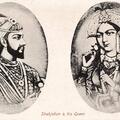
Shahjahan And His Queen
Mughal Emperors continued to live centuries after their death on postcards, most likely based on oval ivory portraits sold to tourists. The Queen here would have been Mumtaz Mahal, for whom Shah Jahan built the Taj Mahal.
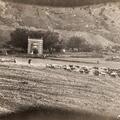
Technically sold as a "Small Series" photography by Randolph Holmes, this candid shot combines sheep, probably a mosque entrance, telegraph and telephone lines.
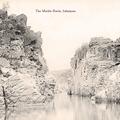
A gorge in the Narmada River with about 8 miles of soft marble rock that remains a delight for tourists.
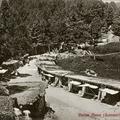
The ongest bridge over the Chenab River in western Punjab was built in the early 1870s with thick fortified turrets. Named after a famous Sufi saint in the area, it is still in use.
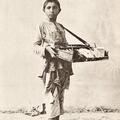
A rather impressive portrait, from a slightly low angle, giving the boy a certain grandeur. Unfortunately, a most rarely postcarded occupation.
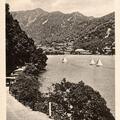
Gangi Sah was one of the first postcard publishers from Nainital, if not the earliest.
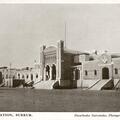
This gem of a railway station was built in 1891.
This is probably a Kodak real photo postcard taken in Saddar Bazaar in Rawalpindi. On the back is written "Pindi City I am standing on the road." One can see a British soldier bottom center facing the camera, left arm on his hip.
A rustic sepia view of a well in the northern SIndhi city of Jacobabad, named after the British General John Jacob (1812-1858), and today one of the hottest places in the world, with a mean temperature of almost 100 degrees Fahrenheit (37 degrees
A very nicely stamped postcard, with the upside down figure, symbol of France, if the the "language" of stamp positioning holds in this case, asking "Do you remember me?"
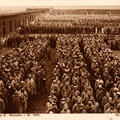
The photograph is also exceptional, with its details of the men's kits, the