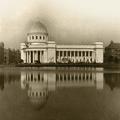
General Post Office, Calcutta
Sepia postcards were printed in a brown colour instead of black inks, and went in and out of fashion from the early 1900s through the 1940s.
Mumbai grew from the 1860s through the 1890s largely because of the international cotton trade, which went from exporting cotton to textile manufacturing mills dotting the city.
A rare postcard of the man who founded the RSS, the Rashtriya Swayamsevak Sangh, an Indian nationalistic, right-wing Hindu organization that continues to play a prominent role in Indian politics, in 1925 in Nagpur following his disillusionment with
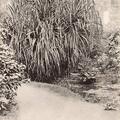
The “screw pine” at the Horticultural Gardens in Madras refers to Pandanus species (often Pandanus utilis / Pandanus odorifer), striking monocot trees with spiralling leaves and stilt‑like aerial roots that were prized as ornamental and economic
K. Lall & Co. were a publisher of interesting real photo postcards, like this one of a cotton spinner, whose flat composition speaks to a style of portrait photography not common among photographers.
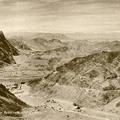
Numerous conqueror's came into the subcontinent through the Khyber Pass, including Darius I of Persia, Alexander the Great, Mahmud of Ghazni, Muhammad of Ghor, Timur (known as Tamerlane in the west), Babur, Nader Shah and Ahmad Shah Durrani.
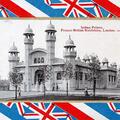
The Franco-British Exhibition of 1908, celebrating a new understanding on dividing up colonial interests between the two powers, came at the height of interest and production of the new medium of postcards.
A unusual two-image postcard, almost the only one from that most prolific of publishers, Moorli Dhur & Sons. It shows two men on their sides, one of whom is smoking an opium pipe. Such scenes are almost never shown in postcards (exception: an opium
One wonders where this photograph was taken, possibly in the Murree hills but it could have been elsewhere too.
Kashmiri women are often shown spinning on postcards because this was an important economic activity in the region.