A Group of 3 Nepaulese
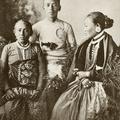
This rare photograph of Nepalis was likely taken in the hillstation of Darjeeling in a studio.

This rare photograph of Nepalis was likely taken in the hillstation of Darjeeling in a studio.
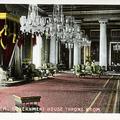
One of the major settings in Raj history, and one of the few interiors shown in postcards. The former Government House in Kolkata is now the Raj Bhavan, the offical residence of the Governor of West Bengal.
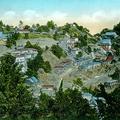
One of the popular postcard views of this hillstation now in Pakistan and once on the major route to Kashmir from Punjab. Murree adheres tightly to a steep hillside. Note how the Protestant Church is on top, and the "native bazaar" descends below.
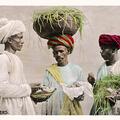
A delicately hand-tinted postcard, with the green stalks breathing life into the frozen men.
![Dharumtalla [Dharmatala] Road, Calcutta](https://www.paperjewels.org/sites/default/files/styles/square_thumbnail/public/slides/dharumtalla-road_0.jpg?itok=sarlOTGT "Dharumtalla [Dharmatala] Road, Calcutta")
Dharmatala (Dharumtalla) Road, now Lenin Sarani in central Kolkata, is one of the busiest thoroughfares in Kolkata. Its original name means "holy street."
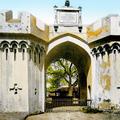
In 1835, Robert Smith, a Military Engineer, constructed this building used for ammunition storage. It apparently still stands as a ruin, after the actual depot was blown up during the Uprising of 1857.
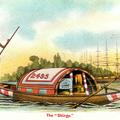
A small boat on the Hooghly, the "Captain Buxo." Hobson-Jobson defines "DINGY, DINGHY , s. Beng. diṇgī; [H. dingī, dengī, another form of dongī, Skt. droṇa, 'a trough.'] A small boat or skiff; sometimes also 'a canoe,' i.e. dug out of a single trunk.
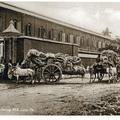
Jute was one of the major agricultural products during the Raj and for some period afterwards, with most of the crop grown in East Bengal, and the fiber processed in mills in and around Kolkata.
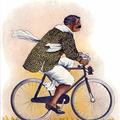
A satirical postcard showing a "Baboo," which Hobson-Jobson defined as used in Kolkata "with a slight savour of disparagement, as characterizing a superficially cultivated, but too often effeminate, Bengali," pulling ahead on the most modern of
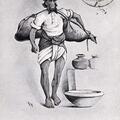
A contemporary artist's rendering of one of the most popular postcard subjects, the all important "bhistie" who brought water in an animal skin to the thirsty.
