Zenana in the Fort, Agra
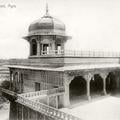
A sharp diagonal composition; in the distance is the Taj Mahal. The zenana refers to the women's quarters in this 16th century fort, largely completed under the Mughal Emperor Akbar.
A sharp diagonal composition; in the distance is the Taj Mahal. The zenana refers to the women's quarters in this 16th century fort, largely completed under the Mughal Emperor Akbar.
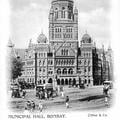
Bombay’s modern municipal headquarters was planned after the municipal corporation’s formation (1865), with the foundation stone for the new building laid in 1884. The building was completed in 1893 to designs by architect F. W.
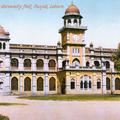
A landmark colonial-era "Indo‑Saracenic" or “Anglo‑Mughal” style building designed by Bhai Ram Singh, with a prominent central clock tower and domed corner elements.
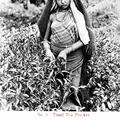
Andree, known for some striking postcard images, may have been Adolphus Williams, Jr. a photographer on York Street in Colombo.
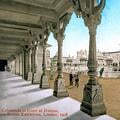
The Franco-British Exhibition (1908) was a major "world’s fair” held in west London (Shepherd’s Bush/White City) from 14 May to 31 October 1908, created to showcase British and French industry, art, and imperial power while publicly celebrating the
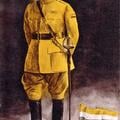
Netaji Subhas Chandra Bose (1897–1945), shown here in his Indian National Army (I.N.A.) uniform, was an Indian nationalist leader who broke with the Indian National Congress’s dominant nonviolent strategy and pursued independence through armed
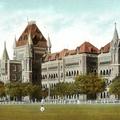
The Bombay High Court is one of the oldest High Courts of India. Constructed of black basalt, the Bombay High Court building was built in the 1870s and faces the Oval Maidan where aspiring young cricketers hone their paces.
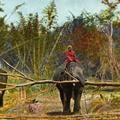
It is unclear where this image is from, but elephants were used during colonial times in Assam, Bengal and Malabar to haul logs out of forests.
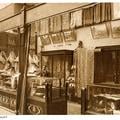
The Patiala State Court was one of the “courts” within the Indian Pavilion at the British Empire Exhibition in Wembley, 1924, a state-branded display space for Patiala’s produce, crafts, and commerce.
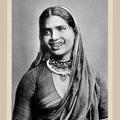
Smiles on postcards from the early 1900s are rather rare, possibly because most portraits required the sitter to stay still for many seconds while the exposure was made, especially in the 19th century when most portraits were struck and re-purposed
