A Scene in Victoria Gardens, Bombay
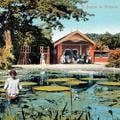
Victoria Gardens, now known as Veermata Jijabai Bhosale Udyan or Rani Bagh is Mumbai's oldest public garden and was established in 1862 and spans 50 acres in the Byculla area.

Victoria Gardens, now known as Veermata Jijabai Bhosale Udyan or Rani Bagh is Mumbai's oldest public garden and was established in 1862 and spans 50 acres in the Byculla area.
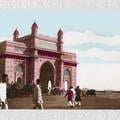
A triumphal arch erected to commemorate the visit of King George V and Queen Mary in 1911, it was completed in its present form in 1924. The Gateway of India was built in the Indo-Saracenic architectural style, combining multiple design elements and
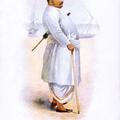
A fine portrait by M.V. Dhurandhar of a Gujarati broker. Gujrati brokers played a pivotal role in Bombay's commercial development during the late 19th and early 20th centuries.
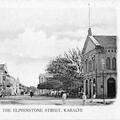
Nusserwanjee & Co. was a prominent business enterprise in Karachi during the British colonial period, owned by the Parsi Nusserwanjee family.
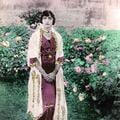
These real photo was both hand-tinted, and, unusually, golden glitter also applied on the woman's wrap.
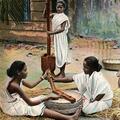
Postmarked Montral December 22, 1907 and sent to Miss Undine [?] Hemming, 213 West 16th St., Los Angeles, CA with this message: "14 Helen St., Montreal. Dear Undine, Have not had a word from any of you for quite a long period.
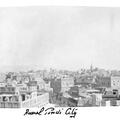
An early real photo postcard of Rawalpindi. These allowed amateurs to directly shoot a postcard in camera, and end up with a photograph which a hundred years later has been faded but can be restored with modern digital tools as this one has been.
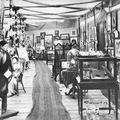
In 1905, a significant exhibition was organized in Bombay (now Mumbai) that marked an important moment in India's colonial and nationalist history. Planned to commemorate the visit of the Prince of Wales (later King George V) to India.
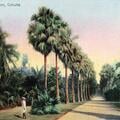
The Acharya Jagadish Chandra Bose Indian Botanic Garden in Kolkata is one of Asia's oldest and most significant botanical institutions, established in 1787 on the west bank of the Hugli River.
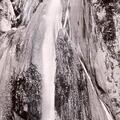
Kempty Falls is one of the most iconic waterfalls in Mussoorie, India, located approximately 15 kilometers from the town center on the Chakrata Road.
