Ziarat, Baluchistan
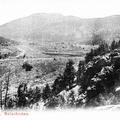
No doubt one of the earliest and very few postcards of this remote hillstation in Balochistan, some 80 miles from Quetta through a juniper forest.

No doubt one of the earliest and very few postcards of this remote hillstation in Balochistan, some 80 miles from Quetta through a juniper forest.
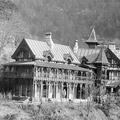
The Ripon Hospital in Shimla, now known as Deendyal Upadhyay Zonal Hospital, has a rich history dating back to the British colonial era.
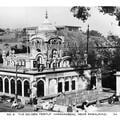
The Gurdwara Panja Sahib, is a highly revered Sikh shrine located in the town of Hasanabdal in Attock District, Punjab, Pakistan is associated with Guru Nanak, the founder of Sikhism.
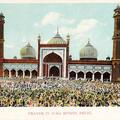
This is a superbly hand-tinted postcard, with both swathes of color (pink and blue) and individual color specs in the crowd mixed with the black ink of the collotype enhancing the effect of a real crowd praying.
![Indian Fakir [Indischer Fakir]](https://www.paperjewels.org/sites/default/files/styles/square_thumbnail/public/slides/indischer-fakir.jpg?itok=M4M-SrmQ "Indian Fakir [Indischer Fakir]")
An Austrian cyanotype (blue-dyed) postcard, where imprinted on the back before the name is "Wohlgeboren Herrn/Frau" which literally means "well born" or "of good birth," which translates into English as "Honorable" or "Esquire." THe honorific was
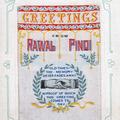
This silk postcard has this message on the back "Dear Amy I hope you will keep the card as a souvenir of Rawalpindi and read mark learn and inwardly digest the reading Your with love Bill."
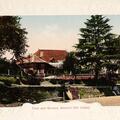
A thickly embossed and framed postcard, a treatment that seems to be more prevalent among hillstation postcards.
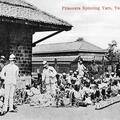
Yerwada jail was originally built outside the city limits of Pune in 1871 by the British, but over time, as Pune expanded, Yerwada became integrated into the city, making the prison more centrally located within the urban area.
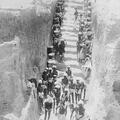
While it is unclear where and when this postcard was taken, it could have been in 1899-1900 when there was a large famine in Hyderabad with relief works photographed by Raja Lala Deen Dayal.

The Cordite Factory in Aruvankadu, India, is a significant defense establishment with a rich history and important role in India's ordnance production.
