Souvenir of Darjeeling Himalaya
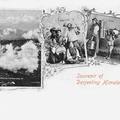
Thomas Paar was one of the earliest publishers of Darjeeling postcards, and a longtime photographer with a grand studio in the middle of the hillstation.
Thomas Paar was one of the earliest publishers of Darjeeling postcards, and a longtime photographer with a grand studio in the middle of the hillstation.

The world's second deepest gold mine near Bangalore. Gold had long been known in the area, but it was only after the application of new engineering methods that size-able finds in the 1880s justified larger investments.
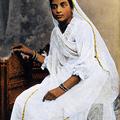
A beautiful example of colorization, with the rich brown of wood and skin set off against the black and white original studio backdrop. On the back, one owner has pencilled in "Hindu Bourgeois."
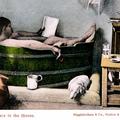
A postcard that sums up the fantasy of colonial life for Europeans. The dog resting by the tub is to Indians most unhygienic, but to Europeans the ultimate Raj bathroom accessory.

This most interesting thing in this composite street scene is the way it brings the many forces of colonialism into view. In the distant background is Karachi's mammoth St. Patrick's Cathedral.
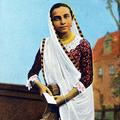
Parsi women were a popular subject—progressive women with traditional virtues, counterpoints to the nautch girl. This Parsi Lady is holding what could be a postcard.

A richly mysterious image by the postcard poet of the Murree hills, Baljee. A whisper of a road peeks out from under the forest coverage on the right above his signature in the original albumen negative.
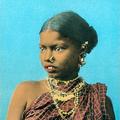
The sitter's expression is among the more memorable antique postcard portraits.
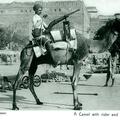
One of the more unusual forces in Rajputana during the Raj was the Bikaner Camel Corps which "had such camels also on which 'jujarbas' or small cannon were mounted" (Nandakiśora Pārīka, Jaipur that was: royal court and the seraglio, p.

A moody postcard illustrating a manufacturing step in the jute export industry. Jute packaging materials were used around the world, particularly in gunny bags.
