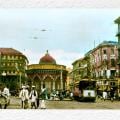
The Round Temple of Mumbai is also known as the Gol Dewal, on what is now Sardar Vallabhbhai Patel Rd. It is also famous for the stone market situated on both sides of it. This market is considered the city's oldest.
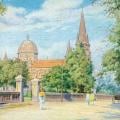
[Original caption] Catholic Cathedral, Lahore. Among the many fine buildings in modern Lahore the noble church in the picture is well worthy of notice. The many trees in its vicinity give quite an English appearance.
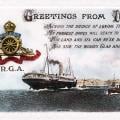
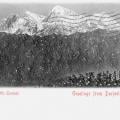
A later "Greetings from" postcard printed by premiere British publisher Beagles on behalf of a Rawalpindi-based publisher who would have sold this to British troops in cantonments like Rawalpindi, in this case members of the Royal Garrison Artillery…
A special embossed Christmas greetings version of this early Tuck's Agra postcard.
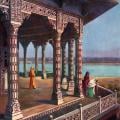
[Original caption] Exterior of Zenana, Agra. Here white marble pavilions look out on delicate inlaid pillars and finely perforated screen's thence across the Jumna.
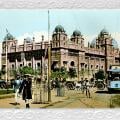
In 1913 the General Post Office moved into its present building which was designed by John Begg, the Consulting Architect to the Government during the period. Mumbai's GPO features the city's famous Indo-Saracenic architectural style.
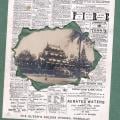
A unique postcard, I know of no other example. A January 26, 1905 front page of the Rangoon Gazette newspaper - itself a source of much interesting information - is fractured with an embossed image of a key landmark in what was then a British…
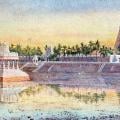
[Original caption] Mylapore Tank. Madras is built in a straggling fashion along the seashore. Most of the roads run between avenues and are flanked by groves of palms and other trees.
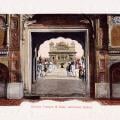
A beautiful embossed and hand-tinted card showing the entrance to Harminder Sahib, the holiest of Sikh sites in Amritsar. All the subdued colors on the entrance way were added by hand through stencils, individually on each postcard.
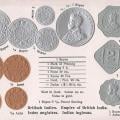
One of those beautiful embossed lithographic cards the Germans were fond of producing that depicted, probably in actual size, coinage and their equivalencies from different parts of the world.