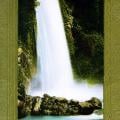
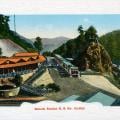
For some unknown reason, Moorli Dhur & Sons most framed, embossed and otherwise uniquely designed postcards are from Chakrata, a cantonment in Dehradun district Chakrata known for its natural beauty, including forests of oak and rhododendron, and…
As the postcard business became increasingly competitive, especially after about 1905, printers and publishers went to great lengths with frames and colours to distinguish their products.
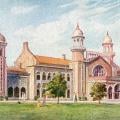
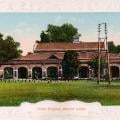
[Original caption] Chief Court, Lahore. This fine building is in the late Pathan style of the 14th century. Between the Court and the Cathedral is a statue of Lord Lawrence who was Chief Commissioner and Lieut. Governor of the Punjab 1853-1859.
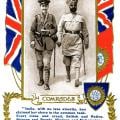
"India, with no less alacrity, has claimed her share in the common task. Every class and creed, British and Native, Princes and People, Hindoos and Mahomedans, vie with one another in a noble and emulous rivalry.
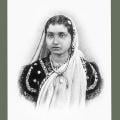
This striking image of a Bengali woman was apparently first published by a Greek tobacconist based in Kolkata, Nestor Gianaclis, and later also published in different variations by D. Macropolo & Co., also a tobacco manufacturer and retailer with…
As competition among postcard publishers intensified between 1905 and 1910, each tried to outdo the other with new formats offered by the German printers who served much of the Indian market.
For a beautiful postcard like this, we might reach for an excerpt by Nirad Chaudhri (1897-1999). Even if written about a different railway station, in East Bengal, it shows how impactful trains were to those in India at the turn of the century.
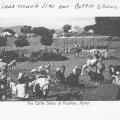
An embossed frame sets off a rare early postcard of what is presumably the famous Pushkar fair, with the colonial perspective of a onetime owner scrawled across the top: "Does not look much like our Cattle Shows."