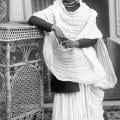
A portrait of a woman in a photographer's studio where the fine detail of her garment and the cane work she is resting her arm on almost overwhelm the sitter. There is also detail in the background, and even the carpet is full of patter.
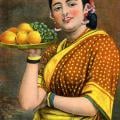
The successful colorization of what was originally a black and white photograph is exemplary. The fruit is nearly tangible, and matches the sari, the purple grapes are echoed on her bangles, the background is suitably subdued, the red and white of…
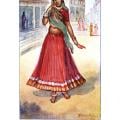
A classic Dhurandhar portrait. The growing metropolis of Bombay with its modern buildings form the backdrop to a fully formed character, in traditional dress, with a quizzical expression on her face. Does she understand what is happening around her?
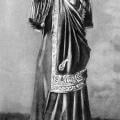
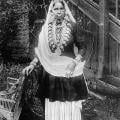
This woman, in a similar pose on a postcard published by and from a photograph by Fred Bremner, was called "A Punditani (Hindu) Kashmir." Inasmuch as titles were fluid, the same image, above, was called "A Daughter of Noah Dal Lake Kashmir" in a…
Dambatenne Estate, established in 1890, is still part of the Lipton's team empire. Perhaps most noteworthy about this advertising postcard is the way the woman's orange clothing is both distinct from and engulfed by the tea leaves.
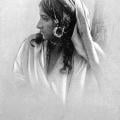
A remarkable portrait, probably taken by the photographer Fred Bremner many of whose images of Kashmir were published by Clifton and Co., one of the earliest all-India postcard publishers.
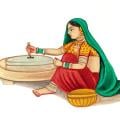
A rare individually hand-painted postcard of a woman with a traditional stone rice grinder, often used to grind rice batter to make South Indian idlis or dosas.
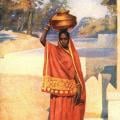
[Original caption] Woman Water Carrier. It is no unusual sight in India to see women performing manual labour, and in some cases they perform harder tasks than the men.