Saiyad Mobarik Ali, Moolvee (Learned Man)
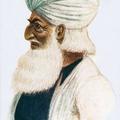
One of siz postcards in Raphael Tuck & Sons first "Native Life in India" series, which featured the work of an artist with the initials G.E.M. who remains unidentified.
One of siz postcards in Raphael Tuck & Sons first "Native Life in India" series, which featured the work of an artist with the initials G.E.M. who remains unidentified.
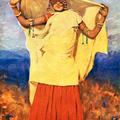
[Original caption] A Belle of Northern India. The women of Delhi and district are, to Western eyes, rather more pleasing than those of many other parts of India.
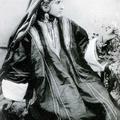
A postcard that shows off the great detail achievable in the collotype printing process.
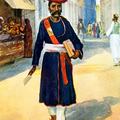
This image by the Indian painter M.V. Dhurandhar celebrates the rise of a new type of worker in early Mumbai - the peon who worked for a business owner or manager and would ultimately gather some authority by controlling access to his boss.
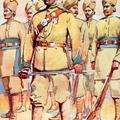
A postcard by the high-quality publisher A.C. Black and Co., Soho Square, London that was used to market their book The Armies of India by Col. A.C. Lovett and Major C.F. MacMunn (1911). The 33rd Punjabis go back to 1857 as the Allahabad Levy and
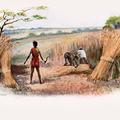
One of those postcards which remind you what an exceptional artist M.V. Dhurandhar was. In the midst of a harvest, with giant sheaves of the crop as if pulled apart like curtains, stands a woman in red with sickle in hand.
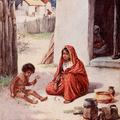
According to the Indian census of 2001, 74% of the population of India lived in 638,365 different villages.
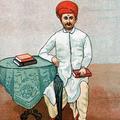
An lithographic postcard, published in India, possibly by "Haji Yusuf Haji Mohammed. Pictures, Post-cards & Cutlery Merchant. Grant Road Cross-Lane.
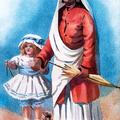
[Original caption] An Ayah - The term ayah may be applied both to nurses for children and for ladies maids.
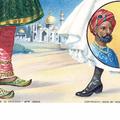
An American card distills the perfect poise between East and West that a sophisticated advertising card can contain. The 1906 card by a rubber manufacturer shows rubber shoes facing off with Mughal footwear. In the distance is a palace.
