Patiala State Court
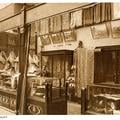
The Patiala State Court was one of the “courts” within the Indian Pavilion at the British Empire Exhibition in Wembley, 1924, a state-branded display space for Patiala’s produce, crafts, and commerce.
The Patiala State Court was one of the “courts” within the Indian Pavilion at the British Empire Exhibition in Wembley, 1924, a state-branded display space for Patiala’s produce, crafts, and commerce.
![[Villagers at Well]](https://www.paperjewels.org/sites/default/files/styles/square_thumbnail/public/slides/villagers-well_0.jpg?itok=vLDASFd9 "[Villagers at Well]")
A really special postcard, a view of rural life usually invisible on to these casual slips of paper.
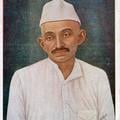
An early postcard of Gandhi, signed by K.L. [?] Joshi and dated 1921, not long after he had been termed the "Mahatma" by Rabindranath Tagore (1915) and had launched the First Non-Cooperation Movement in 1920.
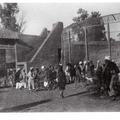
A rare candid shot of a zoo in colonial times. Apparently, Peshawar had a small zoo in the those times located in Shahi Bagh (the “Royal Garden”), a government-owned garden being developed into public pleasure grounds.
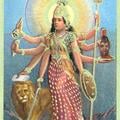
In Hinduism, Durga is a form of Devi, the supreme goddess. Durga is depicted as a warrior woman riding a lion or a tiger with multiple hands carrying weapons and assuming mudras, or symbolic hand gestures.
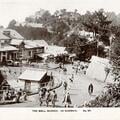
"The Mall, far from serving merely as a site for commerce or recreation, functioned as a symbolic and material articulation of imperial hierarchy, controlling access to commodities and visibility, and reinforcing notions of prestige, superiority, and
![[Woman at loom]](https://www.paperjewels.org/sites/default/files/styles/square_thumbnail/public/slides/woman-at-loom_0.jpg?itok=KOmoyvGo "[Woman at loom]")
K. Lall & Co. were a publisher of interesting real photo postcards, like this one of a cotton spinner, whose flat composition speaks to a style of portrait photography not common among photographers.
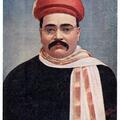
Gopal Krishna Gokhale (1866–1915) was a leading moderate nationalist, social reformer and parliamentarian in early 20th‑century India, best known as founder of the Servants of India Society and as an important political mentor to both M. K.
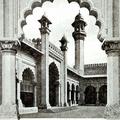
The Indian Pavilion at the 1924 British Empire Exhibition (Wembley) was designed as a major “showpiece” building in an Indo‑Saracenic/Mughal-revival idiom, explicitly modelled on iconic North Indian monuments (often described as drawing on the Jama
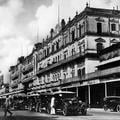
The Grand Hotel on Chowringhee Road, colonial Calcutt's main corridor, is now the Oberoi Grand Hotel. Built in the late 19th century, it was used by thousands of troops in World War II and today is among the most luxurious in India.
