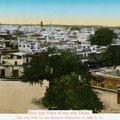
Bird eye View of the city Delhi
[Original] This city built by the Emperor Shahjahan in 1627 A.D. [end]
[Original] This city built by the Emperor Shahjahan in 1627 A.D. [end]
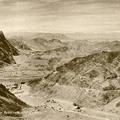
Cherat hill’s position gave commanding views over the Peshawar valley and toward Kohat/Indus, which made it strategically useful as well as climatically attractive to colonists.
Numerous conqueror's came into the subcontinent through the Khyber Pass, including Darius I of Persia, Alexander the Great, Mahmud of Ghazni, Muhammad of Ghor, Timur (known as Tamerlane in the west), Babur, Nader Shah and Ahmad Shah Durrani.
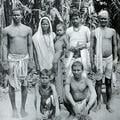
Indian workers were brought over by the British to the West Indian island of Jamaica between 1845 and 1917. Roughly 37,000 people were brought over under an indentured labor system, where they had to work on mostly sugar estates, where strict
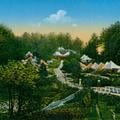
Upper Topa in the Murree Hills was established by the British during colonial rule as a military base, and today hosts the Military College Murree at an altitude of over 2,000 metres.
A muleteer in World War I was a mule driver/handler employed by an army’s transport services to move supplies (and sometimes evacuate wounded) using pack mules, especially where roads were poor and wheeled vehicles couldn’t operate.
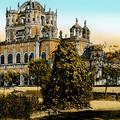
La Martiniere was intended as a palace, became a tomb and is now a school.
La Martinere of Lucknow consists of two schools, one for the boys and another for girls, located on different campuses.
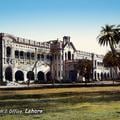
Probably built in the early 20th century, the Public Works Department built and maintained most of the civic infrastructure in Lahore during the colonial period, including courts, colleges and museums.
Known as the 'Old Fort' of Delhi, the Purana Qil'a, lies on the eastern edge of Delhi, along the river Jumna.
[Original German] Ein Tamulenjungling im Festschmuck, Ostindien. [A Tamil boy in festive adornment]
A memorable portrait by a German missionary organization.