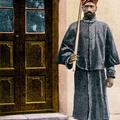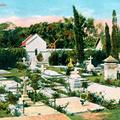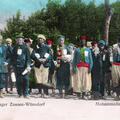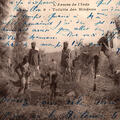
Prisoner of War Camp, Zossen-Wunsdorf, Muslims
During the first World War, the Germans held their captives at a number of camps, and Muslims in particular would find themselves at Zossen-Wunsdorf not far from Berlin.
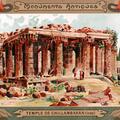
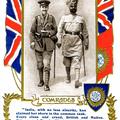
Probably an advertising card on postcard stock, or a trade card that came with some consumer goods, with this caption on the back
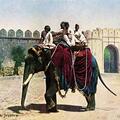
[Original caption, translated from French] The temples of India are called pagodas, and there are some among them which
"India, with no less alacrity, has claimed her share in the common task. Every class and creed, British and Native, Princes and People, Hindoos and Mahomedans, vie with one another in a noble and emulous rivalry.
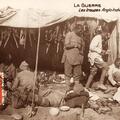
The "Generous Scotsman" is saying: “You are not hot, my brave Indian . . . what do you want I am not offering you my pants!”
Note that the word "Hindou" on French postcards from World War I was used to refer to Indians in general; this was intended
[Verso] "Mission Hospital, Kolar, India.
Dear aunt Connie:
This will not reach you until after your birthday. Am sorry I did not get it off before. Hope you have a very happy day. This center piece was made in a Mission School. Much Love, Edith.
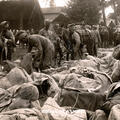
A candid image of Indian troops in Ashurst, Hampshire, England unpacking their kit most likely before being sent to the war front in Europe during World War I.
A very nicely stamped postcard, with the upside down figure, symbol of France, if the the "language" of stamp positioning holds in this case, asking "Do you remember me?"
The photograph is also exceptional, with its details of the men's kits, the
Scenes of Indian troops washing were witnessed by French inhabitants, especially women who often found the soldiers attractive.
A postcard showing goats being marched through the French countryside to feed Indian troops fighting on the Allied side during World War I. These scenes evoked great interest among the local French population and were shown on a number of postcards.
Presented by the Women of Bombay Presidency, this postcard was used to raise funds and support the British and Indian troops fighting in Mesopotamia (modern Iraq) against Turkish forces in World War I.