Toda Mund
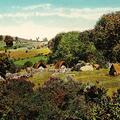
A very well-reserved color view of a Today village, postmarked to France May 23, 1917.

A very well-reserved color view of a Today village, postmarked to France May 23, 1917.
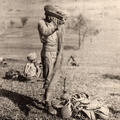
Note the hookah on the ground, next to the soldier unraveling his turban, a sight for French spectators captured here on a postcard.
[Original caption] L'Armee de l'Inde – La Coiffure de l'Hindou
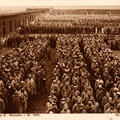
Prisoners, many of whom would have been from India, lining up at the German prisoner of war camp in Munster.
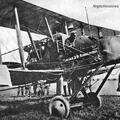
A British fighter plane, called "Rawalpindi" and named after the 29th Punjab regiment, brought down in apparently excellent condition by German forces during World War I.
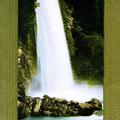
As the postcard business became increasingly competitive, especially after about 1905, printers and publishers went to great lengths with frames and colours to distinguish their products.
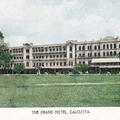
Postmarked Calcutta January 18, 1918 and addressed to Mrs. Louise Fisher, 3820 Michigan Ave., Kansas City, Missouri, U.S.A.: "1/18 We are leaving Calcutta today for Ceylon. Perhaps we shall hear from you there. We hope you are well and happy.
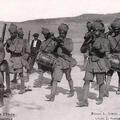
Indian troops in France brought their own music bands which created great interest among the French, who attended concerts in towns where these men performed. Note the dhols and flutes shown here. As one correspondent wrote: “Mr. G.

A spectacularly well-tinted color postcard. Note how well the colors have been applied by hand via stencils to the carpet the woman is sitting on.
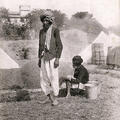
Indian troops in France were supplied by their own cooks and bakers, with the scent of freshly baked naan in tandoori ovens often wafting over the countryside as reported by the journalists who accompanied them.
![Shirshal [Sher Shah] Bridge, Multan](https://www.paperjewels.org/sites/default/files/styles/square_thumbnail/public/slides/shirshal-bridge-multan.jpg?itok=6c5R4IWK "Shirshal [Sher Shah] Bridge, Multan")
The ongest bridge over the Chenab River in western Punjab was built in the early 1870s with thick fortified turrets. Named after a famous Sufi saint in the area, it is still in use.
