The University Hall, Punjab, Lahore
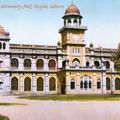
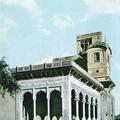
A landmark colonial-era "Indo‑Saracenic" or “Anglo‑Mughal” style building designed by Bhai Ram Singh, with a prominent central clock tower and domed corner elements.
A landmark colonial-era "Indo‑Saracenic" or “Anglo‑Mughal” style building designed by Bhai Ram Singh, with a prominent central clock tower and domed corner elements.
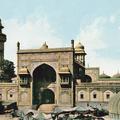
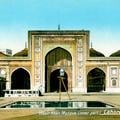
Known for its beautiful "faience" work, a type of fine pottery-tile artwork, the historic Wazir Khan mosque in the walled city of Lahore was built during the reign of the Mughal Emperor Shah Jahan by Shaikh Ilm-ud-din Ansari between 1634 and 1641.
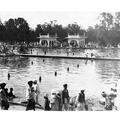
Hector Bolitho, the biographer who spent time in Pakistan in the early 1950s researching his book Jinnah: Creator of Pakistan (1954) wrote this about the Shalimar Gardens:
"While I was in Lahore I made a habit of rising at five o'clock each morning
![Eid Mubarak [Eid Greetings]](https://www.paperjewels.org/sites/default/files/styles/square_thumbnail/public/slides/eid-greetings-4_0.jpg?itok=yxvPcehy "Eid Mubarak [Eid Greetings]")
This lavishly illustrated card, embossed in gold outline, was printed in Germany. It shows how European figures and themes were easily repurposed for local holidays.
The inner courtyard (sahn) of Lahore’s Wazir Khan Mosque built in the 17th century is the mosque’s central open space, organized to frame the prayer hall (on the west) and surrounded by arched cloisters that create a rhythmic, enclosed “room” of sky.
One of the most ornate and lavish rooms within the Lahore Fort. Built during the Mughal emperor Shah Jahan's 17th century reign, the Shish Mahal ("Shish" means mirror) is noted for its beautiful mirror work.
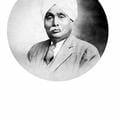
[Original caption on front, shown here] "The blow that was hurled at us this afternoon was a nail in the coffin of the British Empire. Nobody who has seen it is ever likely to forget it. It has sunk deep into our own soul.
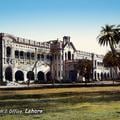
Probably built in the early 20th century, the Public Works Department built and maintained most of the civic infrastructure in Lahore during the colonial period, including courts, colleges and museums.
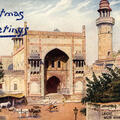
A card with over-printed Christmas Greetings, hard to find but not unusual.
[Original caption] Wazir Khan's Mosque (Outer Part) Lahore.
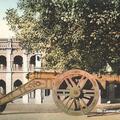
Standing in front of the Lahore Museum, this cannon became known as "Bhangian Di Top" (Cannon of the Bhangis) after it was captured by Hari Singh Bhangi and his forces in 1762, one of the Sikh confederacies.
