Trained Elephants at work (Another view)
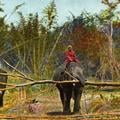
It is unclear where this image is from, but elephants were used during colonial times in Assam, Bengal and Malabar to haul logs out of forests.
It is unclear where this image is from, but elephants were used during colonial times in Assam, Bengal and Malabar to haul logs out of forests.
[Verso] "Mission Hospital, Kolar, India.
Dear aunt Connie:
This will not reach you until after your birthday. Am sorry I did not get it off before. Hope you have a very happy day. This center piece was made in a Mission School. Much Love, Edith.
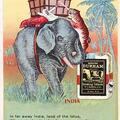
One of America's most recognized international brands around the turn of the century, this was one of 33 postcards advertising the tobacco firm's product.
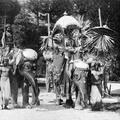
In Ali Raza's excellent book Revolutionary Pasts Communist Internationalism in Colonial India (Tulika Books, 2022) there is this note from a police report in 1926: "A public meeting was held . . . under the auspices of the Nau Jawan Bharat Sabha to
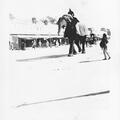
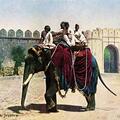
A real photo postcard likely made and sold by a photographer or vendor to tourists visiting Jaipur.
![Indien [India]](https://www.paperjewels.org/sites/default/files/styles/square_thumbnail/public/slides/indien_0.jpg?itok=hE-CHWwq "Indien [India]")
[Verso] In Commemoration of the Visit of the German Crown Prince to East Asia 1910-1911 [end]. A spectacular postcard published in honor of the German Crown Prince Ferdinand's visit to India.
![Indien [India, back]](https://www.paperjewels.org/sites/default/files/styles/square_thumbnail/public/slides/indien-back_0.jpg?itok=jo69xn6I "Indien [India, back]")
[Original caption] In Commemoration of the Visit of the German Crown Prince to East Asia 1910-1911 [back]
The reverse of the spectacular postcard commemorating the visit of Crown Prince Ferdinand to India. Note the Kolkata postmark.
[Original] Zur
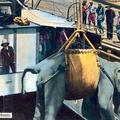
On the back of this self-explanatory card is a an ink blind-stamp "Greetings from My 1910 Cruise Around the World" and "Rangoon Burma Maters [sp?]." The card is postmarked Darjeeling, April 10, 1910 and addressed to "Oscar Schulze, Allegheny,
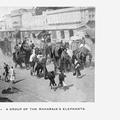
One of the earliest Gobindram Oodeyram postcards, still "court-sized" from a period before the British postal service officially allowed for the larger European standard, two centimeters more in length (14 by 9 cm, though cards of this size
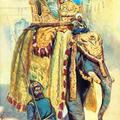
From one of the first Tuck's India postcard series, this image depicts Lord Curzon and his wife Mary on an elephant at the 1903 Delhi Durbar.
