Cotton Cart
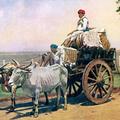
Cotton was the product that helped put 19th century Mumbai on the road to becoming one of the world's major cities. The product was celebrated on postcards like this virtual painting.

Cotton was the product that helped put 19th century Mumbai on the road to becoming one of the world's major cities. The product was celebrated on postcards like this virtual painting.
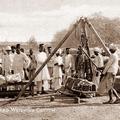
Mumbai grew from the 1860s through the 1890s largely because of the international cotton trade, which went from exporting cotton to textile manufacturing mills dotting the city.
![[Woman at loom]](https://www.paperjewels.org/sites/default/files/styles/square_thumbnail/public/slides/woman-at-loom_0.jpg?itok=KOmoyvGo "[Woman at loom]")
K. Lall & Co. were a publisher of interesting real photo postcards, like this one of a cotton spinner, whose flat composition speaks to a style of portrait photography not common among photographers.
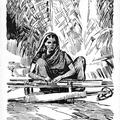
J.D. Gondhalekar (1909-1981) produced a series of at least ten postcards called "Indian Topics" around 1942, among the few Indian-artist signed postcard series from colonial times.
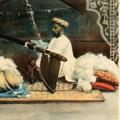
Many early Bombay postcards focused on the cotton trade, the source, with opium, of much of the city's early wealth.
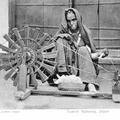
While this postcard published in Jaipur may have had nothing directly to do with the Swadeshi movement then taking off in Bengal, the charkha was am emblem of that cause for self-sufficiency and using indigenous materials and processes instead of
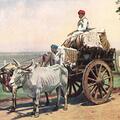
A well-reserved "Lichtdruck" in German or "light-print" which offers the touch of a painted work for one anna.
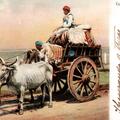
"Thousands of these carts, all over Bombay. 14/4/06"
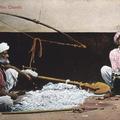
Cotton cultivation in the ancient world may have originated in India 6,000 years ago.
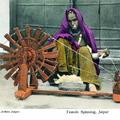
A popular Jaipur postcard shows a woman spinning cotton in front of a traditional door.
