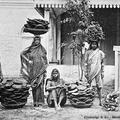
Cotton Cart
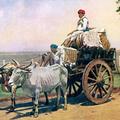
Cotton was the product that helped put 19th century Mumbai on the road to becoming one of the world's major cities. The product was celebrated on postcards like this virtual painting.

Cotton was the product that helped put 19th century Mumbai on the road to becoming one of the world's major cities. The product was celebrated on postcards like this virtual painting.
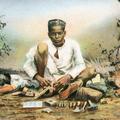
Itinerant workers, cobblers can repair all sorts of things. Note the sophisticated lithographic printing of this image, which some early Clifton & Co.
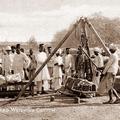
Mumbai grew from the 1860s through the 1890s largely because of the international cotton trade, which went from exporting cotton to textile manufacturing mills dotting the city.
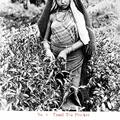
Andree, known for some striking postcard images, may have been Adolphus Williams, Jr. a photographer on York Street in Colombo.
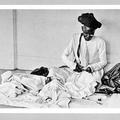
Nestor Gianaclis, like D. Macropolo & Co., another Greek-owned firm, was not primarily a photographer so much as a Greek tobacco merchant whose Calcutta office also issued collotype picture postcards and photographic prints in the early 1900s.
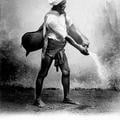
The Pakistani poet Daud Kamal (1935-1987) has a poem entitled Water-Carrier:
More patches on his clothes
than on the empty goatskin
slung across his shoulder.
Like the others
he waits his turn
at the Municipal tap.
Twice a day
he delivers water
free
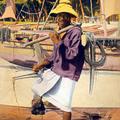
John & Co., Ceylon was an early 20th‑century commercial postcard and view‑card publisher based in Colombo (and very likely also Kandy), part of the broader trade in photographic and printed views of colonial Ceylon.
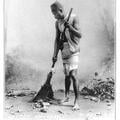
Clifton & Co. published many studio-posed, ethnographic type postcards like this one, made from an albumen print with the firm's title and name inscribed in the negative and visible at the bottom of the frame on this court-sized card.
[Verso, in pencil] "You think your job is bad?" [end]
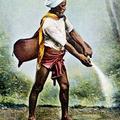
Bhistees supplied water to households and regiments
In the past, water carriers used cured hides of animals to carry water. Today animal hides have been replaced by bottles and jars of plastic.
