Miss Akhtara
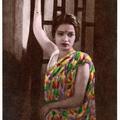
A rare early Bollywood star postcard, though the movie the still is likely taken from, and the sad-looking star are unknown.
A rare early Bollywood star postcard, though the movie the still is likely taken from, and the sad-looking star are unknown.
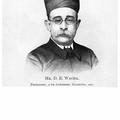
President, 17th Congress, Calcutta 1901
Celebrating one of the many Parsee businessmen who supported the Independence struggle and founded the Indian National Congress Party.
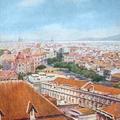
[Original caption] General View, from Clock Tower. Bombay is without doubt a prosperous city. The houses are large, handsome and well-built, the gardens well-laid out and cared for while the streets are clear and orderly.
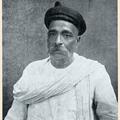
Few if any politicians were as popular as Bal Gangadhar Tilak, the Maharashtrian politician and freedom fighter who spent many years in jail. He was referred to by British authorities as "the father of Indian unrest."
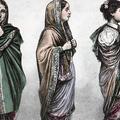
A clever postcard by master artist M.V. Dhurandhar showing the modernization of fashion among women in his hometown of Bombay. This card was published by D.B.
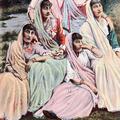
One of the most popular early postcards of Parsees was this arresting composite portrait by Clifton & Co. The original albumen likely dates to the late 1890s.
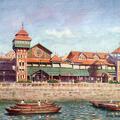
[Original caption] The Royal Bombay Yacht Club. One of the most exclusive clubs in the East, patronized only by the most prominent citizens. [end]
Founded in 1864, this still extremely exclusive club survives in a building next to this one,
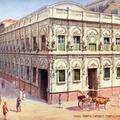
[Original caption] Hindu Temple (Monkey Temple). Kalbadevi Road, Bombay. The famous temple showing very fine architecture. [end]
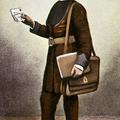
A portrait of the man who made the postcard revolution possible. While the original for this may have been a photograph of an actual postman, the broad strokes make it possible that a painted portrait was used as the source.
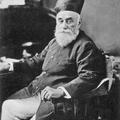
The "father of Indian industry." Jamsetji Nusserwanji Tata (1839-1904) was born in Gujarat and graduated from Elphinstone College in Mumbai in 1858. He founded and sold a successful trading firm, and then built a successful cotton mill that since
