Lucknow. La Martiniere No. 2.
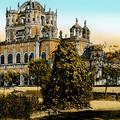
La Martiniere was intended as a palace, became a tomb and is now a school.
La Martinere of Lucknow consists of two schools, one for the boys and another for girls, located on different campuses.

La Martiniere was intended as a palace, became a tomb and is now a school.
La Martinere of Lucknow consists of two schools, one for the boys and another for girls, located on different campuses.
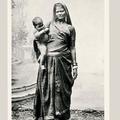
Postmarked Calcutta January 12, 1912 and sent to Ed Froehmer [sp?], Seward, Nebraska, USA.
[Verso] "Calcutta, India January 1012. This is the way that an Indian mother carries her child."
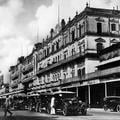
The Grand Hotel on Chowringhee Road, colonial Calcutt's main corridor, is now the Oberoi Grand Hotel. Built in the late 19th century, it was used by thousands of troops in World War II and today is among the most luxurious in India.
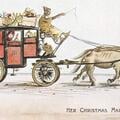
[Original handwritten message, verso] "25/11 Dear David, These are the funny old carriages which we see every day in Calcutta. The old lady has been shopping for Christmas."
An fascinating article on the artist behind this postcard, George Darby, by
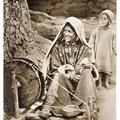
Kashmiri women are often shown spinning on postcards because this was an important economic activity in the region.
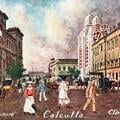
Sujaan Mukherjee writes of Frank Clinger Scallan's postcards of Calcutta: "The artist may or may not have used photographs as reference, but unlike most photographs that depict churches, public buildings or trams, these drawings recall a city that is
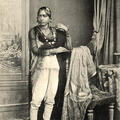
This is the same woman in Dancing Girl, apparently photographed at the same time with Lucknow's Chutter Manzil in the background, but here given a blander description.
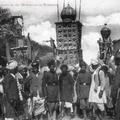
Not too far back, the local Hindu, Sikh and Christian communities would participate in the Shia Taziah processions in Peshawar.
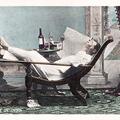
There are many such postcard views, trying to celebrate in a humorous way, life for colonists during the British Raj.
Compare to the black and white version.
David Mordecai (1909-1973) was a prominent Indian photographer and postcard publisher based in Calcutta during the mid-20th century.
