Hindu Religious Beggar
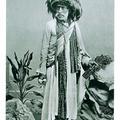
A striking studio portrait in which the viewer's eyes are drawn by to subject's wide-open gaze. Was he asked not to blink? Or did the photographer amend the negative?
A striking studio portrait in which the viewer's eyes are drawn by to subject's wide-open gaze. Was he asked not to blink? Or did the photographer amend the negative?
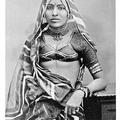
One can imagine that the textiles worn by the woman are vibrant with color, and the postcard could be spectacular hand-tinted, but the stripes still make for a billowing effect in black and white.
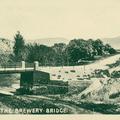
Opened in 1886 by the Murree Brewery Company, the brewery was destroyed in the Quetta Earthquake of 1935 and never rebuilt (the Murree Brewery Company continues to flourish in Pakistan).
Handwritten on the back of this card, no.
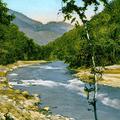
The River Teesta descends from Sikkim at an elevation of over 20,000 feet through Darjeeling and then merges with the Brahmaputra in Bangladesh . This postcard is a good example of how a collotype, well-tinted and with a glossy finish can almost look
![Sir Pertab Singh [Pratab Singh of Idar]](https://www.paperjewels.org/sites/default/files/styles/square_thumbnail/public/slides/pratap-singh-colour.jpg?itok=uXeXaXC1 "Sir Pertab Singh [Pratab Singh of Idar]")
A stunning example of what a well-tinted, non-discoloured postcard looks like some 120 years later.
Sir Pratab Singh (1845-1922) made it on to many postcards as one of the best known Indian officers in the British Indian army, having served from the
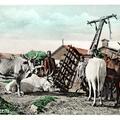
A unusually upturned (emptied) cart with yoke pointing to sky.

These Gurkha soldiers were possibly photographed in the firm's Darjeeling studio (opened 1890) or Simla a few years later.
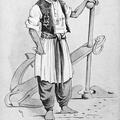
Bengal's rivers were traversed by boats and steamers, on which this man served a captain. The firm he worked for, "I.G.S.N." is likely emblazoned on his shirt.
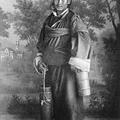
A studio portrait full of contradictions. The milkman from Darjeeling of Tibetan ancestry is shown with an English church in the deep background.

A delicately hand tinted view of Akbar's Tomb outside Agra, built by his son Jehanghir between 1605 and 1613.
