Fisherman, Ceylon

John & Co., Ceylon was an early 20th‑century commercial postcard and view‑card publisher based in Colombo (and very likely also Kandy), part of the broader trade in photographic and printed views of colonial Ceylon.

John & Co., Ceylon was an early 20th‑century commercial postcard and view‑card publisher based in Colombo (and very likely also Kandy), part of the broader trade in photographic and printed views of colonial Ceylon.
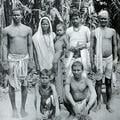
Indian workers were brought over by the British to the West Indian island of Jamaica between 1845 and 1917. Roughly 37,000 people were brought over under an indentured labor system, where they had to work on mostly sugar estates, where strict
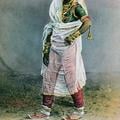
Howard Woody, a pioneer researcher of early German printing postcard technologies writes of this postcard that the collotype’s “light hues accent the woman’s layered costumer and create an attractive luminous image that contrasts with the muted
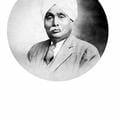
[Original caption on front, shown here] "The blow that was hurled at us this afternoon was a nail in the coffin of the British Empire. Nobody who has seen it is ever likely to forget it. It has sunk deep into our own soul.
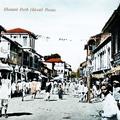
"Bhowani Street" in Pune refers to a street in Bhavani Peth (also spelled "Bhowani Peith" in colonial-era usage), one of the seventeen historic peths (wards/neighborhoods) that constitute old Pune.
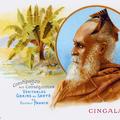
[Original] Cingalais Constipation ses Consequences Veritables Grains de Sante ou Docteur Franck, ([For] Constipation and its
consequences. Spirits beneficial to health from Doctor Franck.) [end]
An early advertising postcard for Doctor Franck's
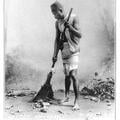
Clifton & Co. published many studio-posed, ethnographic type postcards like this one, made from an albumen print with the firm's title and name inscribed in the negative and visible at the bottom of the frame on this court-sized card.
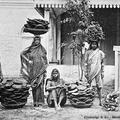
[Verso, in pencil] "You think your job is bad?" [end]
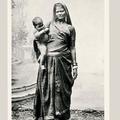
Postmarked Calcutta January 12, 1912 and sent to Ed Froehmer [sp?], Seward, Nebraska, USA.
[Verso] "Calcutta, India January 1012. This is the way that an Indian mother carries her child."
![[Connaught Circle, Delhi]](https://www.paperjewels.org/sites/default/files/styles/square_thumbnail/public/slides/connaught-circle_0.jpg?itok=eaSsOHfD "[Connaught Circle, Delhi]")
Connaught Circle was built as part of Lutyen's Delhi between 1929 and 1933 to be the principal commercial plaza of New Delhi. Rangoon Studio was a well-known photographic studio at 58, Janpath and seems to have closed later as rents rose.
