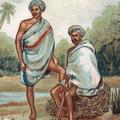
Cultivators
It is unclear whether "Haji Yusuf Haji Mohammed. Pictures, Post-cards & Cutlery Merchant.
It is unclear whether "Haji Yusuf Haji Mohammed. Pictures, Post-cards & Cutlery Merchant.
![Empire of British India and Ceylon [Coins]](https://www.paperjewels.org/sites/default/files/styles/square_thumbnail/public/slides/coins-of-the-raj_0.jpg?itok=58p0u2yD "Empire of British India and Ceylon [Coins]")
A beautiful embossed card showing exchange rates between Indian and European currencies, in those days usually stable for long periods of time.
The H.S.M. in the top left corner stands for Hugo Semmler, Magdeburg, per Helmfried Luers in his The
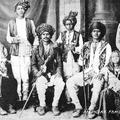
R. Jalbhoy was a major Karachi photographer and postcard publisher at the turn of the century, who could often depict people and parts of the city that fell off the usual tourist or landmark circuit. Note the shoes on the sitters in this studio shot.
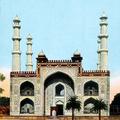
Akbar started building his own tomb at Sikandra, but it was completed by his son Jehanghir in 1605. Although it said that a central dome is missing on this edifice, it remains one of the most exquisite of Mughal gates.
[Verso] "23.8.11 Dear Molly,
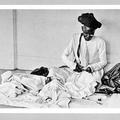
Nestor Gianaclis, like D. Macropolo & Co., another Greek-owned firm, was not primarily a photographer so much as a Greek tobacco merchant whose Calcutta office also issued collotype picture postcards and photographic prints in the early 1900s.
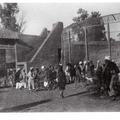
A rare candid shot of a zoo in colonial times. Apparently, Peshawar had a small zoo in the those times located in Shahi Bagh (the “Royal Garden”), a government-owned garden being developed into public pleasure grounds.
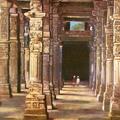
[Original caption] Colonnade, Hindoo Pillars, Kutub Minar. The Pillars, taken by the Mughal conquerors of India from a Hindoo temple, were recut to free them from idols and used to form the colonnade to the mosque.
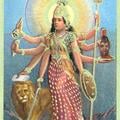
In Hinduism, Durga is a form of Devi, the supreme goddess. Durga is depicted as a warrior woman riding a lion or a tiger with multiple hands carrying weapons and assuming mudras, or symbolic hand gestures.
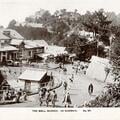
"The Mall, far from serving merely as a site for commerce or recreation, functioned as a symbolic and material articulation of imperial hierarchy, controlling access to commodities and visibility, and reinforcing notions of prestige, superiority, and
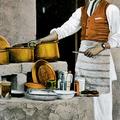
The word "bawarchi" for cook apparently entered Hindi via Urdu from classical Persian. "Chi" is a common Persian suffix meaning "a person who does or is associated with" a type of work.
