The Taj Mahal, Agra

One version of this card, addressed to Miss J. Flint, 124 Belmont Road, Ansfield, Liverpool, has this written on the front: "I wonder whether they will build anything like this over us when we are gone. W.J.O."

One version of this card, addressed to Miss J. Flint, 124 Belmont Road, Ansfield, Liverpool, has this written on the front: "I wonder whether they will build anything like this over us when we are gone. W.J.O."
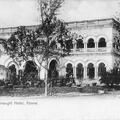
The 1902 Guide to Poona (p. 60) had ad ad for this hotel, described as "A Select Hotel for European Gentry, Entirely under new and excellent European management. European Manageress. Home Comforts, Cleanliness, and First Class Cuisine guaranteed.
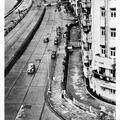
A nice view that guides the eye up the snaked drive.
This card was postmarked from Bombay on Dec. 11, 1953.
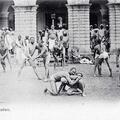
Curiously this view was not one of the more popular Clifton & Co. postcards, one of the first publishers in the city, despite its many scenes and informational value. From the building columns and the firm's location it is likely to be from Bombay.
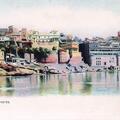
An early multi-coloured view of Varanasi.
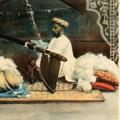
Many early Bombay postcards focused on the cotton trade, the source, with opium, of much of the city's early wealth.
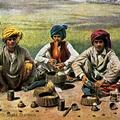
Given how ubiquitous the trope of snake charmers and India was in popular Western culture in the early 20th century, it is refreshing to find that they are not as common in postcards as one might expect. True, major publishers like Clifton & Co.
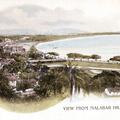
An early keyhole postcard view of Marine Drive, probably from a photograph made in the 1890s.

A gorgeously coloured collotype with the anonymous note on the front: "They are nearly as nice as ruby lips. best."
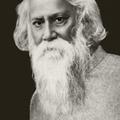
It is hard to over estimate the importance of Rabindranath Tagore at the beginning of the 20th century.
