Victoria Memorial, The Archaeological Museum, Peshawar
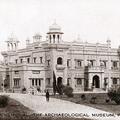
The Victoria Memorial Hall in Peshawar, established in 1907, evolved from a British colonial ballroom into a significant archaeological museum.
The Victoria Memorial Hall in Peshawar, established in 1907, evolved from a British colonial ballroom into a significant archaeological museum.
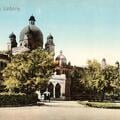
The Lahore Museum was one of the most significant colonial-era museums in British India, established in 1865 and relocated to its current location shown here on Mall Road in 1894. A few years later it became world famous when Rudyard Kipling began
"From its opening day," writes Thomas R. Metcalf in An Imperial Vision Indian Architecture and the British Raj, "the building was praised as a 'successful adaptation of the Indo-Saracenic style to a modern public building. For the Journal of Indian
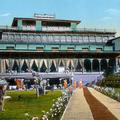
Conceived in 1889, and opened in 1898, the museum is said to contain 80,000 objects from Kashmir and surrounding areas, including important artifacts from excavations led by the Archaeological Survey of India (A.S.I.) during the early part of the
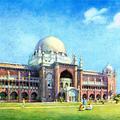
[Original caption] The Museum. As befitting an important town like Bombay, the Museum is indeed a very fine one and contains many valuable collections. [end]
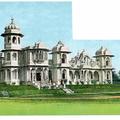
A curious card, with the white space in the top corner intended for a written message by the sender before messages were allowed on the backs of postcard after 1905. The original Victoria Hall Museum, opened in 1890, has since moved to the City
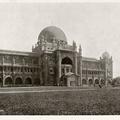
[Original caption] The Museum. As befitting an important town like Bombay, the Museum is, indeed, a very fine one, and contains many valuable collections. [end]
This postcard was likely printed soon after the construction of the Prince of Wales
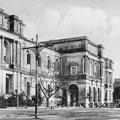
The ninth oldest museum in the world and the oldest in India, what is now known as the Indian Museum Kolkata was started in 1814 by the Asiatic Society of Bengal. A Danish botanist, Nathaniel Wallich, is considered its founder.
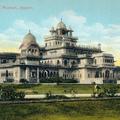
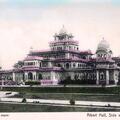
Compare this to an earlier color postcard of the Albert Museum by the same firm from the same image, made when color printing of postcards from photographs was much less sophisticated, at least on a level where costs were low enough for mass consumer
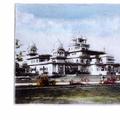
A very early postcard of Jaipur, made from an albumen print, title and photographer visible in white where it was inscribed onto the albumen negative. The color was applied through hand-tinting. Compare to a colorized postcard of the same image made
