Ziarat, Baluchistan
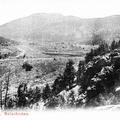
No doubt one of the earliest and very few postcards of this remote hillstation in Balochistan, some 80 miles from Quetta through a juniper forest.
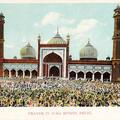
This is a superbly hand-tinted postcard, with both swathes of color (pink and blue) and individual color specs in the crowd mixed with the black ink of the collotype enhancing the effect of a real crowd praying.
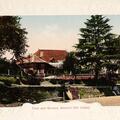
A thickly embossed and framed postcard, a treatment that seems to be more prevalent among hillstation postcards.
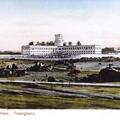
Yerwada jail was originally built outside the city limits of Pune in 1871 by the British, but over time, as Pune expanded, Yerwada became integrated into the city, making the prison more centrally located within the urban area.
The Cordite Factory in Aruvankadu, India, is a significant defense establishment with a rich history and important role in India's ordnance production.
[Original caption] Repaired by the Emperor Humayun in 1540 A.D. According to tradition founded by Pandav King, about 1400 B.C. [end]
A postcard which illustrates how intertwined the printing and publishing of postcards could be among firms.
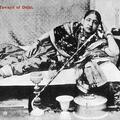
This is the same woman in Dancing Girl, apparently photographed at the same time with Lucknow's Chutter Manzil in the background, but here given a blander description.
Although opium was a major crop in the rise of the East India Company, and India the major producer of opium sent to China, with production carefully taxed and recorded, barely a handful of postcards seem to acknowledge the crop and its manufacture.
While the word "dandy" suggests being fashionable, and may be a secondary meaning, the word is said to actually come from "dandi" or the Hindi/Urdu word for stick, which are used to distribute the woman's weight across them men's shoulders.
Another
By 1899, Karachi had become the largest wheat and cotton exporting port in South Asia. The port's significance in wheat exports grew rapidly, and by 1910, Karachi handled greater quantities of wheat than any other port in the British Empire.