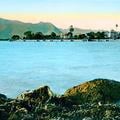
Upper Topa Murree
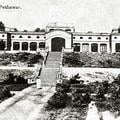
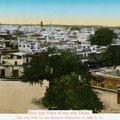
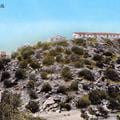
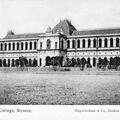
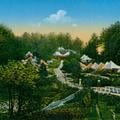
Upper Topa in the Murree Hills was established by the British during colonial rule as a military base, and today hosts the Military College Murree at an altitude of over 2,000 metres.
The Black Hole of Calcutta was made famous by an account written by John Hollwell, now disputed.
In 1756, the Nawab of Bengal, Siraj-ud-daulah captured Fort William and took a number of European prisoners who were unable to escape.
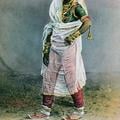
Howard Woody, a pioneer researcher of early German printing postcard technologies writes of this postcard that the collotype’s “light hues accent the woman’s layered costumer and create an attractive luminous image that contrasts with the muted
Udaipur is home so many beautiful lakes and often called the "Venice of the East."
The Lake Palace, also called Jag Niwas or Jagmunda Palace, is the biggest tourist attraction in Udaipur and was constructed by Maharana Jagat Singh II in the mid-18th
A muleteer in World War I was a mule driver/handler employed by an army’s transport services to move supplies (and sometimes evacuate wounded) using pack mules, especially where roads were poor and wheeled vehicles couldn’t operate.
"Bhowani Street" in Pune refers to a street in Bhavani Peth (also spelled "Bhowani Peith" in colonial-era usage), one of the seventeen historic peths (wards/neighborhoods) that constitute old Pune.
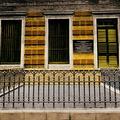
La Martiniere was intended as a palace, became a tomb and is now a school.
La Martinere of Lucknow consists of two schools, one for the boys and another for girls, located on different campuses.
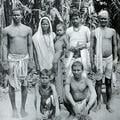
Clifton & Co. published many studio-posed, ethnographic type postcards like this one, made from an albumen print with the firm's title and name inscribed in the negative and visible at the bottom of the frame on this court-sized card.
[Verso, in pencil] "You think your job is bad?" [end]
Postmarked Calcutta January 12, 1912 and sent to Ed Froehmer [sp?], Seward, Nebraska, USA.
[Verso] "Calcutta, India January 1012. This is the way that an Indian mother carries her child."